
by Richard Subber | Oct 3, 2023 | American history, Book reviews, Books, History, World history
a nightmare in slow motion
Book review:
Goodbye, Darkness: A Memoir of the Pacific War
by William Manchester (1922-2004)
Boston: Little, Brown and Company, 1980
401 pages
Manchester’s quietly passionate memories of being a young Marine fighting in the Pacific theater in World War II are terrible to behold.
In Goodbye, Darkness he tells all of his story: the good, the bad, and the really hard to read parts.
Reading Goodbye, Darkness means watching another man’s nightmare in slow motion.
* * * * * *
Book review. Copyright © Richard Carl Subber 2023 All rights reserved.
Book review: An Empire on the Edge
by Nick Bunker
Of course the British really wanted to win
the Revolutionary War,
but they had good reasons
for not trying too hard…
–
As with another eye: Poems of exactitude with 55 free verse and haiku poems,
and the rest of my poetry books are for sale on Amazon (paperback and Kindle)
and free in Kindle Unlimited, search Amazon for “Richard Carl Subber”
* * * * * *

by Richard Subber | Sep 5, 2023 | Book reviews, Books, History, World history
more than one Christianity…
Book review:
Christendom:
The Triumph of a Religion, AD 300-1300
by Peter Heather (b1960
New York: Alfred A. Knopf, 2022
704 pages
Christendom is not a cheerleading book written by a true believer.
Heather makes it plain that Christianity never had an unchallenged inside track to be the dominant religion in the Western world, although it has predominated for centuries.
There was more than one variety of Christianity from the beginning, and papal leadership was not established until the 11th century.
Christian leadership is a largely manmade circumstance.
The reader has the opportunity to learn much about the Christian church and Christendom that was unacknowledged until historians started to dig deeper in the modern era.
* * * * * *
Book review. Copyright © Richard Carl Subber 2023 All rights reserved.
Book review: Seven Gothic Tales
by Isak Dinesen,
these are lush and memorable stories…
–
In other words: Poems for your eyes and ears with 64 free verse and haiku poems,
and the rest of my poetry books are for sale on Amazon (paperback and Kindle)
and free in Kindle Unlimited, search Amazon for “Richard Carl Subber”
* * * * * *

by Richard Subber | Aug 24, 2023 | American history, Book reviews, Books, History, Human Nature
you can’t change your socks…
Book review:
With the Old Breed: At Peleliu and Okinawa
by Eugene B. Sledge (1923-2001)
New York: Oxford University Press, 1981
326 pages
Marine Cpl. Eugene B. Sledge (his Marine buddies called him “Sledgehammer”) knew there is no glory in combat. There is fear, comradeship, pain, duty, hunger, honesty, sadness, loyalty, and death.
With the Old Breed is a shockingly restrained and horribly candid account of Sledge’s experiences in the attacks on Peleliu and Okinawa by the 3rd Battalion, 5th Regiment, of the 1st Marine Division in the last year of World War II.
Read it, and you can mumble their prayers as you share the troubled joy of combat soldiers who survive the fighting in which their friends die.
* * * * * *
Book review. Copyright © Richard Carl Subber 2023 All rights reserved.
–
In other words: Poems for your eyes and ears with 64 free verse and haiku poems,
and the rest of my poetry books are for sale on Amazon (paperback and Kindle)
and free in Kindle Unlimited, search Amazon for “Richard Carl Subber”
* * * * * *

by Richard Subber | Aug 20, 2023 | American history, Book reviews, Books, History, Politics, Power and inequality
before there were “managers”…
Book review:
The Visible Hand:
The Managerial Revolution in American Business
by Alfred D. Chandler Jr. (1918-2007)
Cambridge, MA: The Belknap Press of Harvard University Press, 1977
608 pages
A densely researched and densely written history of the evolving American environment for various forms of capitalism and the appearance in the middle of the 19th century of “managers” who didn’t own the business or do the work.
You’ll learn some stuff about commercial, entrepreneurial, financial, and managerial capitalism.
This is an academic treatment of the good, the bad, and the ugly in the history of American corporate structure and performance. Chandler rarely refers to the political and moral aspects of the good works, the charlatanry, and the grossly criminal actions of the movers and shakers in the 19th century and early 20th century business world.
* * * * * *
Book review. Copyright © Richard Carl Subber 2023 All rights reserved.
Book review: Saint Joan
by George Bernard Shaw
–
In other words: Poems for your eyes and ears with 64 free verse and haiku poems,
and the rest of my poetry books are for sale on Amazon (paperback and Kindle)
and free in Kindle Unlimited, search Amazon for “Richard Carl Subber”
* * * * * *
by Richard Subber | May 28, 2023 | American history, Book reviews, Books, History, Human Nature
self-serving lies, and dreams…
Book review:
The Self-Made Man in America:
The Myth of Rags to Riches
by Irvin G. Wyllie (1920-1974)
New York, The Free Press, 1954
210 pages
The Self-Made Man in America is a historian’s delight.
Wyllie offers the multiple meanings of “the self-made man” throughout American history, connecting historical elements of the American dream and the self-serving promotion of the concept by titans of industry and their bankers.
There is a panoply of quotations from key decision-makers throughout the decades that aid the reader in understanding how Americans at all ranks in the socioeconomic spectrum advocated, criticized, and embodied the siren song of “the self-made man.”
To be sure, Wyllie plainly states his verdict: “Throughout all our history the self-made man was the exception not the rule…success has been for the few, not the many….Men who occupy the lowest places in our society have known the facts for a long time…but…men on the bottom need dreams.” (p. 174)
* * * * * *
Book review. Copyright © Richard Carl Subber 2023 All rights reserved.
Book review:
Moral Tribes by Joshua Greene
he’s sincere, but off the mark…
–
As with another eye: Poems of exactitude with 55 free verse and haiku poems,
and the rest of my poetry books are for sale on Amazon (paperback and Kindle)
and free in Kindle Unlimited, search Amazon for “Richard Carl Subber”
* * * * * *
by Richard Subber | Mar 15, 2023 | American history, Book reviews, Books, History, Power and inequality
guns and germs…
Book review:
1491:
New Revelations of the Americas Before Columbus
by Charles Mann
New York: Vintage Books, 2011
1491 offers everything you never knew about civilized people in the Americas before the Europeans arrived and killed most of them (OK, many died in battle, but it was European diseases, mostly). Maybe close to 100 million “native” people died within 100 years or so of the “discovery” by Columbus…but hold on, this book is not about Wounded Knee-type criticism or ex post facto self-flagellation.
In 1491, Mann beautifully describes the marvelous sophistication of cultures, cities, agriculture, arts, and science that blossomed in North America, Central America, and South America thousands of years ago, in many cases predating achievements and growth and civilization in Europe.
Yes, the Incas never used the wheel except for children’s toys.
Yes, the Mississippian city of Cahokia was a bustling port and a trading center with population equal to Paris in France—and that was 500 years before Columbus sailed.
Yes, the Olmec culture in what is now Mexico invented the zero whole centuries before mathematicians in India did the same.
My recollection of schoolboy learning about the history of the Americas is that the dates and events were tied to discovery and conquest and colonization by Europeans. The implication was that, before the white men with guns, germs and steel arrived, nothing much was going on in whole continents characterized more by “virgin land” and “endless wilderness” than by people who had agriculture, city life, art, trade, commerce, religion, science, kings, and philosophers.
Mann offers 1491: New Revelations of the Americas Before Columbus. For me, the joy of reading this book is learning about the multiplicity of cultures that flourished in the Americas, and learning how they tamed and managed and very greenly conserved their environment…and for me, the sad revelation of this book is understanding that the peoples of the Americas were human beings whose achievements were noble and notable, and yet, lamentably, their cultural legacies are largely lost and the losses are barely mourned.
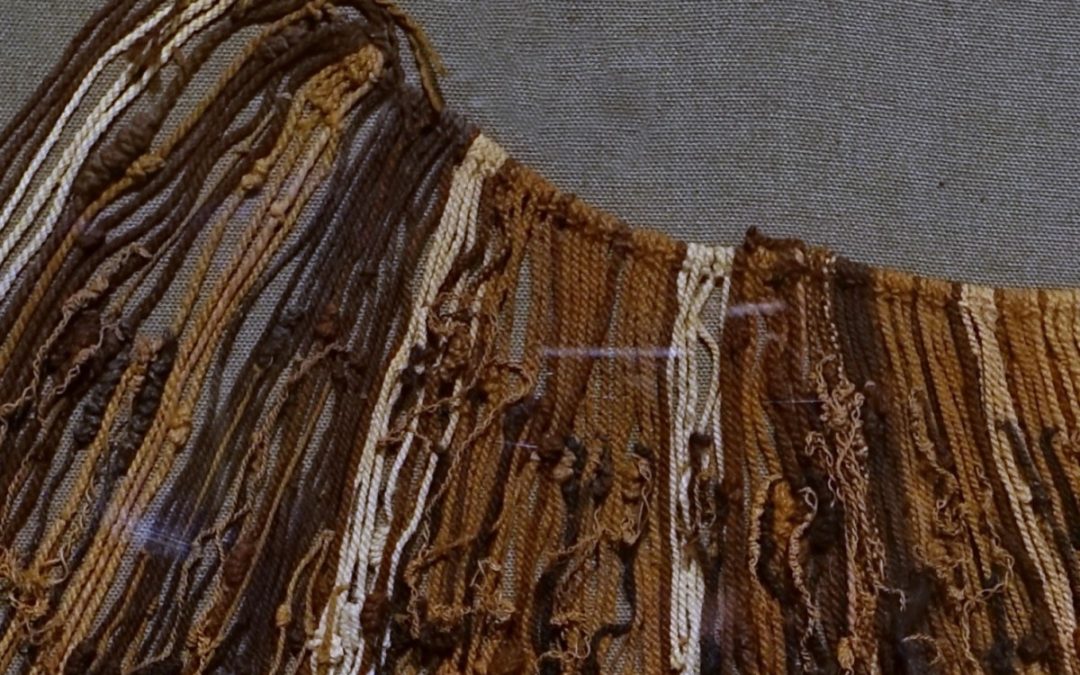
In 1533 Pizarro and his conquistadors at Cuzco precipitated the decline of the 300-year-old Inca empire in Peru. Fifty years later, the Spanish colonial administrators in Peru ordered the burning of all the Incan “khipu” knotted string records because they were “idolatrous objects.” Khipu were the Incas’ only form of writing. The smoke from the burning of their books gets in your eyes, forever and ever.
* * * * * *
Book review. Copyright © Richard Carl Subber 2023 All rights reserved.
Book review: The Sea Runners
…it informs, it does not soar…
by Ivan Doig
–
Writing Rainbows: Poems for Grown-Ups with 59 free verse and haiku poems,
and the rest of my poetry books are for sale on Amazon (paperback and Kindle)
and free in Kindle Unlimited, search Amazon for “Richard Carl Subber”
* * * * * *
