
by Richard Subber | Feb 6, 2025 | Books, My poetry, Poetry, Reflections, Tidbits
think of new tomorrows…
caper
“The impossible closes around
like a smooth lake
on an early morning swim.”
…and you taste it,
and stroke through it,
the unseen ripples chase you
as you push your little wave ahead,
you think of new tomorrows,
and you make a silent promise,
and you see the new possible
as it capers on the morning shore.
December 23, 2024
The quote is from “Everything that is not you” by Jane Hirshfield. It inspired me.
* * * * * *
My poetry. Copyright © Richard Carl Subber 2025 All rights reserved.
Book review: Tales from Shakespeare
summaries by Charles and Mary Lamb…
–
Writing Rainbows: Poems for Grown-Ups with 59 free verse and haiku poems,
and the rest of my poetry books are for sale on Amazon (paperback and Kindle)
and free in Kindle Unlimited, search Amazon for “Richard Carl Subber”
Your comments are welcome—tell me what you’re thinking.
* * * * * *
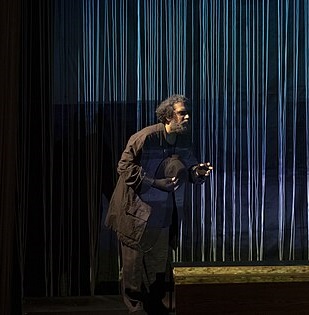
by Richard Subber | Feb 4, 2025 | Book reviews, Books
where’s the beef?
Book review:
The Stranger/L’Etranger
by Albert Camus (1913-1960)
New York: Vintage International, 1942, 1989
Matthew Ward, trans.
123 pages
I know this is Camus’ first novel, and I know Camus is famous.
The Stranger leaves me cold. The prose is wan, the story detail isn’t too interesting, and the protagonist doesn’t step off the pages much.
Try it if you want to.
* * * * * *
Book review. Copyright © Richard Carl Subber 2025 All rights reserved.
The Reader (Der Vorleser)
Not just a rehash of WWII…
by Bernhard Schlink
–
Writing Rainbows: Poems for Grown-Ups with 59 free verse and haiku poems,
and the rest of my poetry books are for sale on Amazon (paperback and Kindle)
and free in Kindle Unlimited, search Amazon for “Richard Carl Subber”
* * * * * *

by Richard Subber | Jan 30, 2025 | Book reviews, Books
just a ramble…
Book review:
The Homesman
by Glendon Swarthout (1918-1992)
New York: Weidenfeld & Nicolson, 1988
239 pages
Yeah, The Homesman is a story, alright, but it’s not a page turner.
Swarthout fails to make the homesman likable or believable.
The storyline just basically rambles across the prairie, with a bit of dancing thrown in here and there.
The homesman doesn’t commit to anything, and the author doesn’t commit to anything.
Read the whole story if you want to.
* * * * * *
Book review. Copyright © Richard Carl Subber 2025 All rights reserved.
Book review: “Bartleby, the Scrivener”
Loneliness beyond understanding…
by Herman Melville
–
Above all: Poems of dawn and more with 73 free verse poems,
and the rest of my poetry books are for sale on Amazon (paperback and Kindle)
and free in Kindle Unlimited, search Amazon for “Richard Carl Subber”
* * * * * *
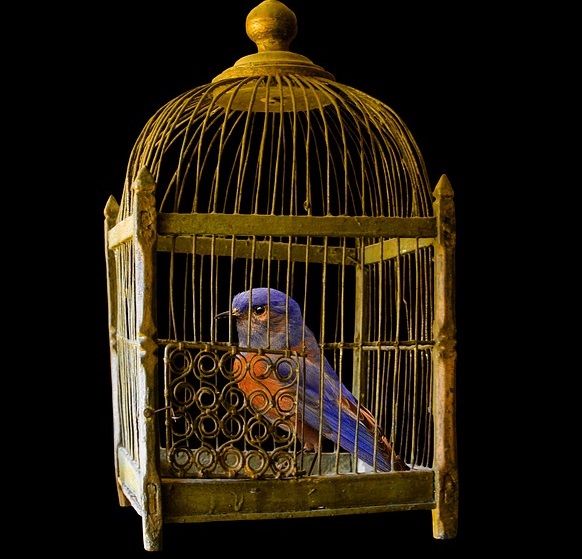
by Richard Subber | Jan 26, 2025 | Books, My poetry, Poetry, Reflections, Tidbits
I’ve seen other creatures…
la cage
I could be wrong,
I think I’m a bird.
It’s hard to put it into words
‘cause I can’t talk
in exactly the way
the big creature does.
The creature can’t sing, of course,
I’ve sung the easy tunes
so many times,
but all I hear from the creature
is “la la la”
and “mmmh mmmh,”
without a speck of joy.
The creature gives me food,
although the seeds are really old
and the bugs are already dead!
and nectar?
oh well, I’ll keep waiting…
The hairy thing that barks
doesn’t jump up any more,
I stopped being scared.
It’s a good thing I’m up so high!
I did get to fly once
when the creature
forgot to shut the little door,
but I didn’t go far,
my little arms got tired,
then I moved around three times
and then the creature grabbed me—
it didn’t hurt—
and now I’m back inside.
I can see through the wall,
the sun is sometimes bright,
the sticks with greenish things
go up and down,
and back and forth,
I’ve seen other creatures
that sort of look like me,
I heard one sing my song.
A while ago, when it was dark
I think I had a thought…
I’m sitting here…
I can’t remember it.
December 7, 2024
“la cage” was inspired by “A Caged Bird” by Sarah Orne Jewett (1849-1909)
excerpt:
“High at the window in her cage
The old canary flits and sings,
Nor sees across the curtain pass
The shadow of a swallow’s wings.”
* * * * * *
My poetry. Copyright © Richard Carl Subber 2025 All rights reserved.
Book review: Shantung Compound
They didn’t care so much
about each other…
by Langdon Gilkey
–
In other words: Poems for your eyes and ears with 64 free verse and haiku poems,
and the rest of my poetry books are for sale on Amazon (paperback and Kindle)
and free in Kindle Unlimited, search Amazon for “Richard Carl Subber”
Your comments are welcome—tell me what you’re thinking.
* * * * * *

by Richard Subber | Jan 23, 2025 | Book reviews, Books, Poetry, Reviews of other poets
there’s more than structure involved…
Book review:
American Poetry: The Nineteenth Century
Vols. 1 and 2
New York: The Library of America, 1993
Vol. 1 – 1,099 pages
Vol. 2 – 1,049 pages
What can I say?
In general, the poetry of bygone centuries is uninteresting to me.
The poets were convinced that structure was overwhelmingly important, or, perhaps, their readers were convinced that structure was overwhelmingly important, or, perhaps, both.
The word “relentless” comes to my mind. It’s difficult for me to read much of this work—silently or aloud—without bobbing my head, saying the emphasized syllables with increasing vigor and noise, and moving my body to match the all-too-obvious, often drum beat rhythms.
It seems to me that these poets think that the conjunction of selected words is of secondary or tertiary concern, whereas I believe it should be the overriding expression of the poetic arts.
The millions in the past disagreed. So be it.
* * * * * *
Book review. Copyright © Richard Carl Subber 2025 All rights reserved.
Forget about Buffy the Vampire Slayer
Dracula is a scary book, really…
by Bram Stoker
–
Seeing far: Selected poems with 47 free verse and haiku poems,
and the rest of my poetry books are for sale on Amazon (paperback and Kindle)
and free in Kindle Unlimited, search Amazon for “Richard Carl Subber”
* * * * * *

by Richard Subber | Jan 21, 2025 | Books, My poetry, Poetry, Reflections, Tidbits
one more round…
before it’s light…
It’s not quite day,
and I haven’t completely
shrugged sleep from my thoughts,
I’m thinking this is the short time,
this is “get started” time,
this is the gossamer moment
for pulling on the bright shirt
and welcoming one more day,
one more morning,
one more round of life,
one more chance
to get it mostly right,
I’m thinking nothing new here,
just like yesterday,
do good things,
get ready for tomorrow.
October 2, 2024
…waiting for breakfast at Easter’s Country Kitchen, Hingham, MA
Published in Creative Inspirations, Jan-Feb 2025 issue
* * * * * *
My poetry. Copyright © Richard Carl Subber 2025 All rights reserved.
Book review: Hag-Seed
by Margaret Atwood…it ain’t Shakespeare
–
Seeing far: Selected poems with 47 free verse and haiku poems,
and the rest of my poetry books are for sale on Amazon (paperback and Kindle)
and free in Kindle Unlimited, search Amazon for “Richard Carl Subber”
Your comments are welcome—tell me what you’re thinking.
* * * * * *
