Book review: A Cold Welcome

Book review: A Cold Welcome

not even cold comfort…


Book review:

A Cold Welcome:

The Little Ice Age

and Europe’s Encounter

   with North America


by Sam White

Cambridge: Harvard University Press, 2017

361 pages


Welcome this one: it’s a new take on the colonial history of America.

White’s focus is on the repeated attempts and mostly repeated failures of the Spanish, French, and English governments and rich entrepreneurs to establish survivable colonies on the North American continent up to and through the 16th century.

There’s a new bad guy in the story: cold weather, aka the Little Ice Age.

It’s A Cold Welcome, indeed.

Conventionally, the Little Ice Age is a well-researched period of global cooling that ended about 1850, and began as early as the 14th century, and no later than the 16th century.

European explorers and colonists believed, and were encouraged to believe, that they could expect European, even Mediterranean temperatures and weather in the so-called New World.

They were disastrously wrong time after time. Sam White proposes that Indian resistance, bad luck, poor planning, and freak bad weather were not the only reasons that so many colonial enterprises failed before 1600.

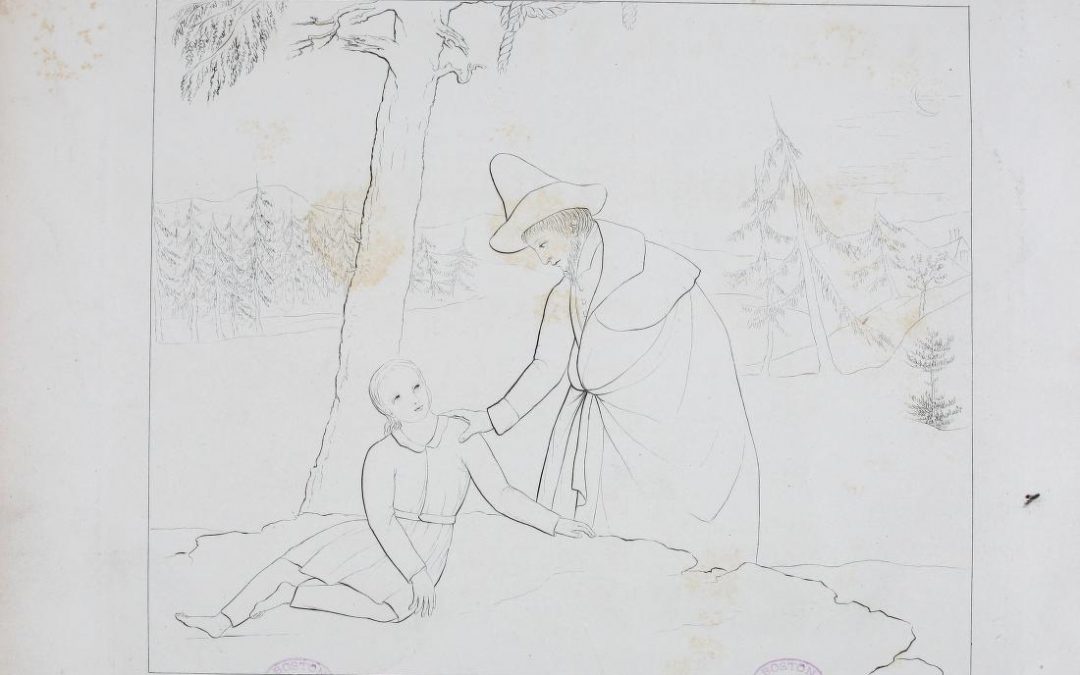
A Cold Welcome explains that there is ample modern scientific evidence, and persistent references in the primary source texts, to verify that the inhospitable cold weather killed crops, animals, and the colonists themselves. In 1541 a Spanish adventurer in what is now Arkansas recorded: “There were such great snows and cold weather that we thought we were dead men.”

The killing cold devastated the indigenous Americans, as well.

There was no place to get in out of the cold.

*   *   *   *   *

Book review. Copyright © Richard Carl Subber 2018 All rights reserved.


In other words: Poems for your eyes and ears with 64 free verse and haiku poems,
and the rest of my poetry books are for sale on Amazon (paperback and Kindle)
and free in Kindle Unlimited, search Amazon for “Richard Carl Subber”
Book review: Waterloo

The slightly Hollywood bravery

        of Richard Sharpe,

the butcher’s work done at the battle…

by Bernard Cornwell

click here

*   *   *   *   *   *


Book review: Tales from Shakespeare

Book review: Tales from Shakespeare

Not your daddy’s Shakespeare…


Book review:

Tales from Shakespeare


by Charles and Mary Lamb

Richard M. Powers, illustrator

Clifton Fadiman, afterword

New York: The Macmillan Company, 1966

358 pages


These are pleasantly readable summaries of 20 plays by The Bard. The prose is modern English but it tends toward a Shakespearian feel.

Caveat: it’s not a substitute for reading the originals.

Tales from Shakespeare is a tempting refresher for folks who have “done” Shakespeare, and it’s a tempting invitation to the newcomer.

The play’s the thing!

*   *   *   *   *   *

Book review. Copyright © Richard Carl Subber 2018 All rights reserved.

Seeing far: Selected poems with 47 free verse and haiku poems,
and the rest of my poetry books are for sale on Amazon (paperback and Kindle)
and free in Kindle Unlimited, search Amazon for “Richard Carl Subber”

*   *   *   *   *   *

Follow Rick on Facebook

Thoughtful book reviews by Rick Subber

Nothing Found

Book review: The House by the Sea

Book review: The House by the Sea

“…I went out in a passion…”


Book review:

The House by the Sea


May Sarton (1912-1995)

American novelist, poet

New York: W. W. Norton and Company, 1977

288 pages


Buy a copy to keep.

I’m telling you, and you can tell others: this is an easy book to enjoy—all at once, or, as I do it, for 10 minutes at a time, snatched from the Sandman every night when I get into bed.

May Sarton gracefully offers the seat next to hers, looking out the window at the world as she delights in seeing it. Planting the seeds and pulling the weeds are events in her days.

The House by the Sea is intensely casual, and casually brilliant—Sarton liberally scatters the sparkles in her journal of a somewhat solitary life that she is so capably eager to share.

You won’t be surprised by the potency of her wise, wonderful, and willing words, such as

“Loneliness is the poverty of self; solitude is the richness of self.”

*   *   *   *   *   *

Book review. Copyright © Richard Carl Subber 2018 All rights reserved.


A Farewell to Arms (book review)

classic Ernest Hemingway

    with relentlessly realistic dialogue…

click here


Writing Rainbows: Poems for Grown-Ups with 59 free verse and haiku poems,
and the rest of my poetry books are for sale on Amazon (paperback and Kindle)
and free in Kindle Unlimited, search Amazon for “Richard Carl Subber”
​​

 Your comments are welcome—tell me what you’re thinking.

*   *   *   *   *   *

Book review: An Anthology of the New England Poets

Book review: An Anthology of the New England Poets

“…a parcel of vain strivings…”


Book review:

An Anthology

   of the New England Poets:

    From Colonial Times

    to the Present Day


Edited by Louis Untermeyer, New York: Random House, 1948 


A hearty sampling of nearly 35 American poets, spanning 340 years. Louis Untermeyer is a first-class editor, offering rich biographical sketches of each poet.

For the beginning student of American poetry, this is a heady introduction. If you already know something about poetry, you can dive deep.

The big names are included, of course: Frost, Longfellow, Millay, Dickinson, Thoreau, Holmes, Whittier, Emerson.

The other selected poets offer a variety of voices and sensitivities and styles.

Untermeyer does first class service as editor, with a biography of each poet and a reference framework of his/her times. For my taste, the sketches of many of the poets were more informative and appealing than their works.

Untermeyer doesn’t presume to rate the poets in Anthology. He offers a well-informed understanding of the evolution and expression of poetry among New England writers.

Here’s a morsel:

“I am a parcel of vain strivings tied

      By a chance bond together,

   Dangling this way and that…”

From “I Am a Parcel of Vain Strivings Tied” by Henry David Thoreau (1817-1862), written in 1841

*   *   *   *   *   *

Book review. Copyright © Richard Carl Subber 2018 All rights reserved.

Writing Rainbows: Poems for Grown-Ups with 59 free verse and haiku poems,
and the rest of my poetry books are for sale on Amazon (paperback and Kindle)
and free in Kindle Unlimited, search Amazon for “Richard Carl Subber”
​​-

Forget about Buffy the Vampire Slayer

Dracula is a really scary book, really…

by Bram Stoker

click here

*   *   *   *   *   *

Follow Rick on Facebook

Thoughtful book reviews by Rick Subber

Nothing Found

Book review: Six Plays by Henrik Ibsen

Book review: Six Plays by Henrik Ibsen

“Millions of women…”


Six Plays by Henrik Ibsen


by Henrik Ibsen (1828-1906)

Norwegian playwright, theater director, and poet

The Modern Library, New York  1957

Translated and with introduction by Eva Le Gallienne


In this volume, for your delectation:

A Doll’s House

Ghosts

An Enemy of the People

Rosmersholm

Hedda Gabler

The Master Builder


Ibsen is OK for beach reading whenever the sun disappears and you have to scooch down in your chair with a blanket and a hoodie to keep warm.

Of course it’s possible to argue with the notion that this is a collection of Ibsen’s best—for my taste, just about any half dozen of Ibsen’s plays is worth putting in the beach bag.

My favorite in Six Plays is “A Doll’s House.” It’s Ibsen’s stark, unforgiving play about men and women, with a dreadful undercurrent of desperation. Torvald Helmer offers only bland, devastating condescension to Nora, whose despair grows ever more public as she realizes that she has drowned herself in the domestic dead end of being Torvald’s “doll-wife.”

If you ache to bash Torvald and comfort Nora as you experience the pervasive and thinly veiled brutality in the Helmer household, then you, like me, must realize how much you wish it could be unimaginable in any way…but in vain…

Nora tells her husband that she had hoped he would take the blame for her transgression, and the disdainful Torvald rebukes her: “…one doesn’t sacrifice one’s honor for love’s sake.”

Nora replies with quiet thunder: “Millions of women have done so.”

Enfin, we understand how Nora could be too hurt to cry, and too happy to remain in a doll’s house…

*   *   *   *   *   *

Book review. Copyright © Richard Carl Subber 2018 All rights reserved.

Book review: Ethan Frome

not being satisfied with less…

by Edith Wharton

click here

​-

My first name was rain: A dreamery of poems with 52 free verse and haiku poems,
and the rest of my poetry books are for sale on Amazon (paperback and Kindle)
and free in Kindle Unlimited, search Amazon for “Richard Carl Subber”

*   *   *   *   *   *

Follow Rick on Facebook

Thoughtful book reviews by Rick Subber

Nothing Found

Book review: The Myths of Tet

Book review: The Myths of Tet

Our generals lied about it…


Book review:

The Myths of Tet:

The Most Misunderstood Event of the Vietnam War


Edwin E. Moïse

Lawrence, KS: University Press of Kansas, 2017

276 pages


Too many lies. That’s what Edwin Moïse’s book says about the war in Vietnam.

No surprise, more or less. Moïse carefully and compellingly documents the lies created by American generals in Vietnam (“body counts,” “we’re winning the war”) and fed to credulous U. S. government officials right up to President Johnson. In The Myths of Tet, Moïse documents the lies manufactured by North Vietnamese military leaders and used to rationalize their combat strategies that resulted in uncounted military and civilian deaths.

The U. S. was not “winning the war” at the time of the Tet attacks in 1968. The early success of the North Vietnamese and Viet Cong attacks was barely understood at the time by the American intelligence apparatus. American combat deaths soared immediately, but somehow this evidence of enemy military success was not fully interpreted by the U. S. military, the American government, and the American people.

Sadly, truth wasn’t the only casualty of the Tet Offensive.

I was in the city of Hue two years after the Tet fighting. The city still looked like a combat zone in 1970. Every wall and building I saw was pockmarked by bullets and explosives. The graffiti that North Vietnamese soldiers had scrawled on the walls was still visible, and it wasn’t funny.

That’s no lie.

*   *   *   *   *   *


Book review. Copyright © Richard Carl Subber 2017 All rights reserved.

 
Above all: Poems of dawn and more with 73 free verse poems,
and the rest of my poetry books are for sale on Amazon (paperback and Kindle)
and free in Kindle Unlimited, search Amazon for “Richard Carl Subber”


Thanks for checking out my website. Here’s what you’ll find:

my poetry in free verse and 5-7-5 format—nature poems, love poems, poems about grandchildren, and a spectrum of other topics—written in a way that makes it possible for you to know, as precisely as possible, what’s going on in my mind and in my imagination;

thoughtful book reviews that offer some exceptional critique of the book instead of a simple book summary;

bits of history that did and didn’t happen;

luscious examples of my love affair with words;

my reflections on the words, art, and wisdom of famous and not-so-famous people, and occasional comments on politics and human nature.

Your comments on my poems, book reviews, and other posts are welcome.


Book review: To Serve Them All My Days

by R. F. Delderfield

A beloved teacher,

      you know this story…

click here

*   *   *   *   *   *

Follow Rick on Facebook

Thoughtful book reviews by Rick Subber

Nothing Found

Pin It on Pinterest