by Richard Subber | Apr 12, 2026 | American history, Book reviews, Books, History, Joys of reading
This is good storytelling
Book review:
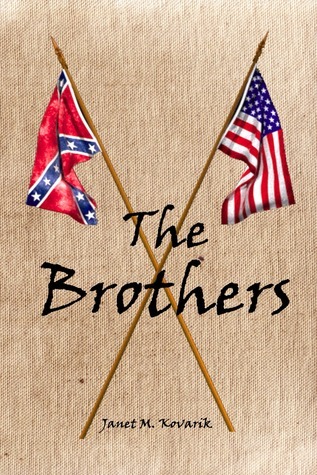
The Brothers
by Janet M. Kovarik
2014
If you’re a student of the Civil War, you’ll recognize the actual historical figures who are part of the story, and you’ll quickly feel comfortably familiar with Stu and Beau and Sarah and their families, because they embody some of the compelling human agents of the wartime drama.
These characters are three-dimensional. There is human urgency in their speech and actions. These are cerebral characters who are articulately reflective, thoughtful about their circumstances and their life journeys, and passionate about love and rectitude and their personal legacies and futures.
The Brothers is the first novel in The McCullough Saga. The twins, Beau and Stu, have explicitly distinct personalities but their lives have remarkably similar if unconventional trajectories. They are the central figures in a human story, on a human scale, with a conspicuously realistic historical setting. Storm Haven, their deep South plantation, is convincingly researched, as are the gritty battle scenes, the economics and logistics of the war, the arduous success of the Underground Railroad and the delights of antebellum southern cuisine.
The Brothers is a dialogue-rich offering of historical fiction. I’m a dialogue fan. This is good storytelling.
* * * * * *
Book review. Copyright © Richard Carl Subber 2026 All rights reserved.
The Bridges of Madison County
book/movie review
If you’re looking for highly stoked eroticism,
look elsewhere.
–
many waters: more poems with 53 free verse poems,
and the rest of my poetry books are for sale on Amazon (paperback and Kindle)
and free in Kindle Unlimited, search Amazon for “Richard Carl Subber”
* * * * * *
by Richard Subber | Apr 9, 2026 | Joys of reading, Language, Reviews of other poets
I’m open to being tantalized…
“We are the hollow men
We are the stuffed men”
from “The Hollow Men,” 1925, by T. S. Eliot
Thomas Stearns Eliot (1888-1965)
American-British writer, popularly acclaimed as a great poet of the 20th century
At long last, I’ve tried T. S. Eliot’s poetry.
I respectfully think that T. S. Eliot’s poetry is a bloomin’ wasteland…
Maybe I’ll put Collected Poems of T. S. Eliot back on the shelf, and try again after a while.
Maybe not.
It’s not that I mind Eliot’s deliberate contradictions so much. I’m willing to be provoked. I’m open to being tantalized. I’m ready to be pushed or pulled outside my comfort zone.
The sticky point for me, with Eliot’s poetry, is that I never seem to get to the point, or maybe I simply don’t get the point. When I get to the end of one of his longish poems, I’m really not sure where I started, or where I wandered, or where I arrived.
I find little coherence in Eliot’s words and phrases and passages.
I think of myself as a wordsmith, and I love the beauty of elegant phrases and shimmering, specific, steely, selective, stately, splendid words that tell a delicious story or evoke a bloom of emotion.
For my taste, T. S. Eliot’s poetry isn’t tasty, and it’s a bloomin’ wasteland of jumbled words, fractured images, and unfinished imaginations.
If you’re wondering where all the flowers have gone, don’t look for answers in Eliot’s work.
Source: T. S. Eliot, Collected Poems of T. S. Eliot (New York: Harcourt, Brace & Company, 1958), 101.
* * * * * *
Copyright © Richard Carl Subber 2026 All rights reserved.
“Fishering,” by Brian Doyle
…what meets the eye…
–
Above all: Poems of dawn and more with 74 free verse poems,
and the rest of my poetry books are for sale on Amazon (paperback and Kindle)
and free in Kindle Unlimited, search Amazon for “Richard Carl Subber”
* * * * * *
by Richard Subber | Mar 31, 2026 | American history, Books, History, Human Nature, Politics, Power and inequality, World history
guns and germs…
Book review:
1491: New Revelations of the Americas Before Columbus
by Charles Mann
New York: Vintage Books, 2011
553 pages
Everything you never knew about civilized people in the Americas before the Europeans arrived and killed most of them (OK, many died in battle, but it was European diseases, mostly). Maybe close to 100 million “native” people died within 100 years or so of the “discovery” by Columbus…but hold on, this book is not about Wounded Knee-type criticism or ex post facto self-flagellation.
In 1491, Mann beautifully describes the marvelous sophistication of cultures, cities, agriculture, arts and science that blossomed in North America, Central America, and South America thousands of years ago, in many cases predating achievements and growth and civilization in Europe. Yes, the Incas never used the wheel except for children’s toys. And yes, the Mississippian city of Cahokia was a bustling port and a trading center with population equal to Paris in France—and that was 500 years before Columbus sailed.
And yes, there were grand cities (e.g., Cahokia) in the Americas before there was pyramid-building in Egypt. And yes, the Olmec culture in what is now Mexico invented the zero whole centuries before mathematicians in India did the same.
My recollection of schoolboy learning about the history of the Americas is that the dates and events were tied to discovery and conquest and colonization by Europeans. The implication was that, before the white men with guns, germs, and steel arrived, nothing much was going on in whole continents characterized more by “virgin land” and “endless wilderness” than by people who had agriculture, city life, art, trade, commerce, religion, science, kings, and philosophers.
Mann offers 1491: New Revelations of the Americas Before Columbus. For me, the joy of reading this book is learning about the multiplicity of cultures that flourished in the Americas, and learning how they tamed and managed and very greenly conserved their environment…and for me, the sad revelation of this book is understanding that the peoples of the Americas were human beings whose achievements were noble and notable, and yet, lamentably, their cultural legacies are largely lost and the losses are barely mourned.
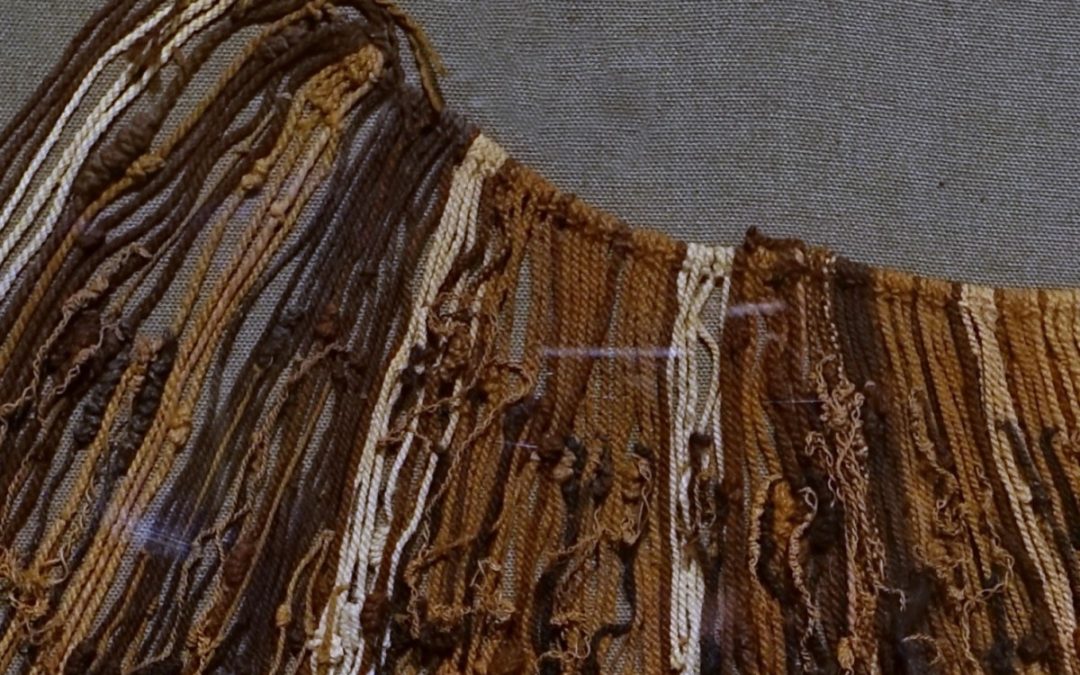
In 1533 Pizarro and his conquistadors at Cuzco precipitated the decline of the 300-year-old Inca empire in Peru. Fifty years later, the Spanish colonial administrators in Peru ordered the burning of all the Incan “khipu” knotted string records because they were “idolatrous objects.” Khipu were the Incas’ only form of writing. The smoke from the burning of their books gets in your eyes, forever and ever.
* * * * * *
Book review. Copyright © Richard Carl Subber 2026 All rights reserved.
Book review: Shantung Compound
They didn’t care much
about each other…
by Langdon Gilkey
–
Writing Rainbows: Poems for Grown-Ups with 59 free verse and haiku poems,
and the rest of my poetry books are for sale on Amazon (paperback and Kindle)
and free in Kindle Unlimited, search Amazon for “Richard Carl Subber”
* * * * * *
by Richard Subber | Mar 19, 2026 | American history, Book reviews, Books, History, Politics, Power and inequality
it’s about money, not journalism
Book review:
Newspapers and Democracy:
International Essays on a Changing Medium
Anthony Smith, ed.
Cambridge, MA: The MIT Press, 1980
Newspapers and Democracy may be of most interest to informed readers who understand the basics of the history and the modern business model of newspapers, and want more historical context.
The essays were published in 1980. There is no mention of the internet or Google or social media or any of the digital manifestations that have crowded the traditional newspaper audience into a small corner.
There is no substantial or convincing assessment of the putative public service mission of “the press” that has been blatantly claimed by newspaper owners and journalists for at least more than 60 years.
Newspapers and Democracy is a museum piece, not an explanation of the alleged “power” of the alleged “free press.”
* * * * * *
Book review. Copyright © Richard Carl Subber 2026 All rights reserved.
–
Seeing far: Selected poems with 47 free verse and haiku poems,
and the rest of my poetry books are for sale on Amazon (paperback and Kindle)
and free in Kindle Unlimited, search Amazon for “Richard Carl Subber”
* * * * * *
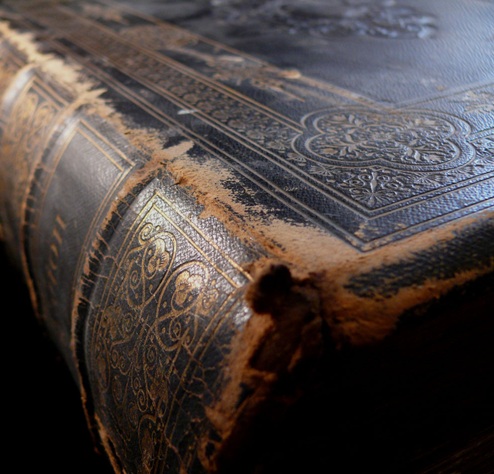
by Richard Subber | Mar 17, 2026 | Books, Joys of reading, My poetry, Poetry
not just any book…
old books
A book is not just a book.
The writer knows the book,
at least, the wholeness of it,
and what was left unscribed.
Each reader knows the book,
at least, the meaning of the words
in their order,
and in their revelation,
and in their singularity,
their growth as understanding molds them.
An old book is a shell of its time,
a memento of its era,
a souvenir of thought and thinking,
a precious invitation
to live in the past,
a reality of expectations,
generations of meaning,
a companion of other words.
December 24, 2025
* * * * * *
My poetry. Copyright © Richard Carl Subber 2026 All rights reserved.
Book review: Sketches by Boz
…the Miss Willises are a scream…
by Charles Dickens
–
As with another eye: Poems of exactitude with 55 free verse and haiku poems,
and the rest of my poetry books are for sale on Amazon (paperback and Kindle)
and free in Kindle Unlimited, search Amazon for “Richard Carl Subber”
Your comments are welcome—tell me what you’re thinking.
* * * * * *

by Richard Subber | Mar 15, 2026 | Book reviews, Books, Joys of reading, Language
We’re all connected…
Book review:
The Mother Tongue: English & How It Got That Way
by Bill Bryson (b1951)
New York: Harper Perennial, 1990
270 pages
The Mother Tongue is a fascinating collection of details you haven’t dreamed of about the English language. It’s easy enough to skim the parts that you don’t need to read in detail.
If you think that English stands alone as our primary means of communication, think again, and then think again.
We’re all connected by words, and the connections are everywhere.
As it happens, English is the pre-eminent language of the world. Of course, that doesn’t mean that English speakers are pre-eminent, but it does mean that if the little guys ever step out of the spaceship from Mars, it won’t take them long to figure out which language they want to learn first.
There is a really elaborate bibliography if you want to know more.
* * * * * *
Book review. Copyright © Richard Carl Subber 2026 All rights reserved.
Book review: Shakespeare’s Wife
Germaine Greer went overboard a bit…
–
Above all: Poems of dawn and more with 74 free verse poems,
and the rest of my poetry books are for sale on Amazon (paperback and Kindle)
and free in Kindle Unlimited, search Amazon for “Richard Carl Subber”
* * * * * *
