by Richard Subber | Apr 12, 2026 | American history, Book reviews, Books, History, Joys of reading
This is good storytelling
Book review:
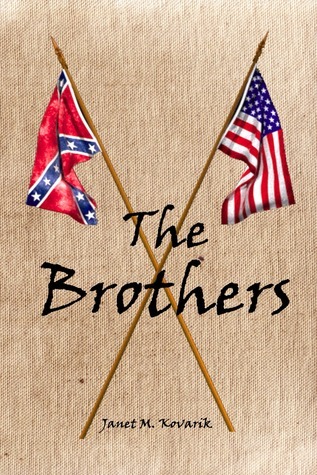
The Brothers
by Janet M. Kovarik
2014
If you’re a student of the Civil War, you’ll recognize the actual historical figures who are part of the story, and you’ll quickly feel comfortably familiar with Stu and Beau and Sarah and their families, because they embody some of the compelling human agents of the wartime drama.
These characters are three-dimensional. There is human urgency in their speech and actions. These are cerebral characters who are articulately reflective, thoughtful about their circumstances and their life journeys, and passionate about love and rectitude and their personal legacies and futures.
The Brothers is the first novel in The McCullough Saga. The twins, Beau and Stu, have explicitly distinct personalities but their lives have remarkably similar if unconventional trajectories. They are the central figures in a human story, on a human scale, with a conspicuously realistic historical setting. Storm Haven, their deep South plantation, is convincingly researched, as are the gritty battle scenes, the economics and logistics of the war, the arduous success of the Underground Railroad and the delights of antebellum southern cuisine.
The Brothers is a dialogue-rich offering of historical fiction. I’m a dialogue fan. This is good storytelling.
* * * * * *
Book review. Copyright © Richard Carl Subber 2026 All rights reserved.
The Bridges of Madison County
book/movie review
If you’re looking for highly stoked eroticism,
look elsewhere.
–
many waters: more poems with 53 free verse poems,
and the rest of my poetry books are for sale on Amazon (paperback and Kindle)
and free in Kindle Unlimited, search Amazon for “Richard Carl Subber”
* * * * * *
by Richard Subber | Mar 31, 2026 | American history, Books, History, Human Nature, Politics, Power and inequality, World history
guns and germs…
Book review:
1491: New Revelations of the Americas Before Columbus
by Charles Mann
New York: Vintage Books, 2011
553 pages
Everything you never knew about civilized people in the Americas before the Europeans arrived and killed most of them (OK, many died in battle, but it was European diseases, mostly). Maybe close to 100 million “native” people died within 100 years or so of the “discovery” by Columbus…but hold on, this book is not about Wounded Knee-type criticism or ex post facto self-flagellation.
In 1491, Mann beautifully describes the marvelous sophistication of cultures, cities, agriculture, arts and science that blossomed in North America, Central America, and South America thousands of years ago, in many cases predating achievements and growth and civilization in Europe. Yes, the Incas never used the wheel except for children’s toys. And yes, the Mississippian city of Cahokia was a bustling port and a trading center with population equal to Paris in France—and that was 500 years before Columbus sailed.
And yes, there were grand cities (e.g., Cahokia) in the Americas before there was pyramid-building in Egypt. And yes, the Olmec culture in what is now Mexico invented the zero whole centuries before mathematicians in India did the same.
My recollection of schoolboy learning about the history of the Americas is that the dates and events were tied to discovery and conquest and colonization by Europeans. The implication was that, before the white men with guns, germs, and steel arrived, nothing much was going on in whole continents characterized more by “virgin land” and “endless wilderness” than by people who had agriculture, city life, art, trade, commerce, religion, science, kings, and philosophers.
Mann offers 1491: New Revelations of the Americas Before Columbus. For me, the joy of reading this book is learning about the multiplicity of cultures that flourished in the Americas, and learning how they tamed and managed and very greenly conserved their environment…and for me, the sad revelation of this book is understanding that the peoples of the Americas were human beings whose achievements were noble and notable, and yet, lamentably, their cultural legacies are largely lost and the losses are barely mourned.
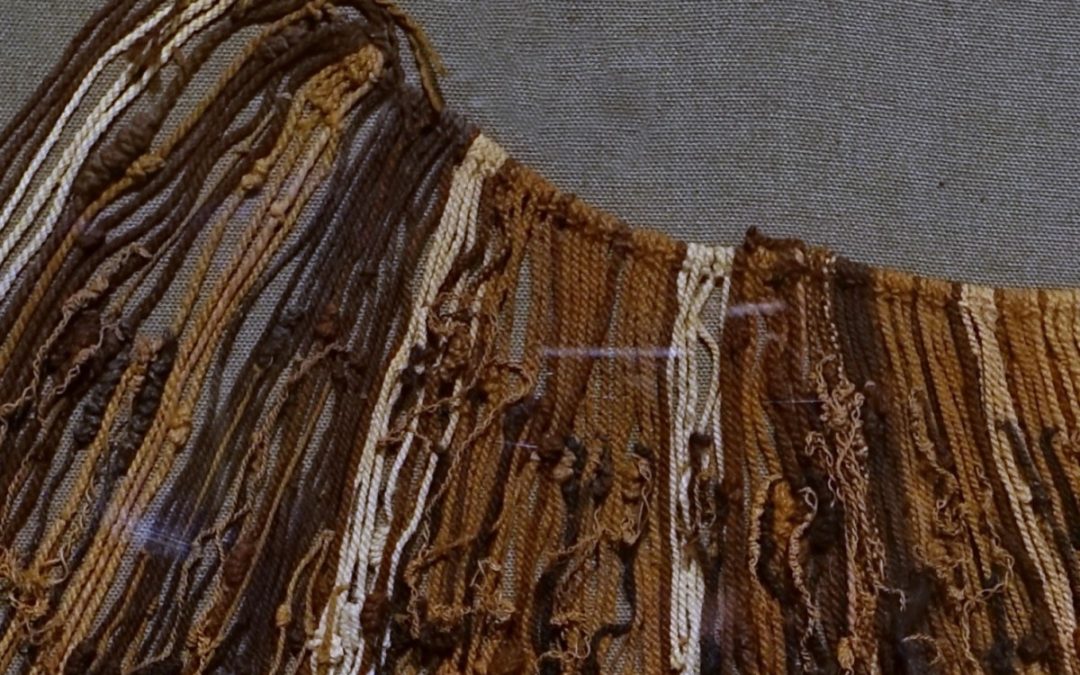
In 1533 Pizarro and his conquistadors at Cuzco precipitated the decline of the 300-year-old Inca empire in Peru. Fifty years later, the Spanish colonial administrators in Peru ordered the burning of all the Incan “khipu” knotted string records because they were “idolatrous objects.” Khipu were the Incas’ only form of writing. The smoke from the burning of their books gets in your eyes, forever and ever.
* * * * * *
Book review. Copyright © Richard Carl Subber 2026 All rights reserved.
Book review: Shantung Compound
They didn’t care much
about each other…
by Langdon Gilkey
–
Writing Rainbows: Poems for Grown-Ups with 59 free verse and haiku poems,
and the rest of my poetry books are for sale on Amazon (paperback and Kindle)
and free in Kindle Unlimited, search Amazon for “Richard Carl Subber”
* * * * * *

by Richard Subber | Mar 19, 2026 | American history, Book reviews, Books, History, Politics, Power and inequality
it’s about money, not journalism
Book review:
Newspapers and Democracy:
International Essays on a Changing Medium
Anthony Smith, ed.
Cambridge, MA: The MIT Press, 1980
Newspapers and Democracy may be of most interest to informed readers who understand the basics of the history and the modern business model of newspapers, and want more historical context.
The essays were published in 1980. There is no mention of the internet or Google or social media or any of the digital manifestations that have crowded the traditional newspaper audience into a small corner.
There is no substantial or convincing assessment of the putative public service mission of “the press” that has been blatantly claimed by newspaper owners and journalists for at least more than 60 years.
Newspapers and Democracy is a museum piece, not an explanation of the alleged “power” of the alleged “free press.”
* * * * * *
Book review. Copyright © Richard Carl Subber 2026 All rights reserved.
–
Seeing far: Selected poems with 47 free verse and haiku poems,
and the rest of my poetry books are for sale on Amazon (paperback and Kindle)
and free in Kindle Unlimited, search Amazon for “Richard Carl Subber”
* * * * * *

by Richard Subber | Jan 29, 2026 | American history, Book reviews, Books, History, Reflections, World history
…the last battle never comes…
Book review:
We Were Soldiers Once…and Young
Lt. Gen. Harold G. Moore (ret.) and Joseph L. Galloway
New York: Random House, 1992
412 pages
Like Moore and Galloway, I salute the brave American and North Vietnamese soldiers who fought and died in the Ia Drang Valley in November 1965 in the first major combat action of the War in Vietnam.
We Were Soldiers Once…and Young is a bloody testament to the grinding horror of war. It’s too much to read all at once. It has too much death.
A North Vietnamese commander who was on the ground in the valley recalled, many years after the war, that his guiding principle had been “win the first battle.”
He forgot to mention that no one knows how to win the last battle and end all of it.
* * * * * *
Book review. Copyright © Richard Carl Subber 2026 All rights reserved.
Movie review: A Doll’s House
Henrik Ibsen’s classic on abuse…
–
Seeing far: Selected poems with 47 free verse and haiku poems,
and the rest of my poetry books are for sale on Amazon (paperback and Kindle)
and free in Kindle Unlimited, search Amazon for “Richard Carl Subber”
* * * * * *

by Richard Subber | Jan 4, 2026 | Book reviews, Books, History, Human Nature
the work of mortal men and women…
Book review:
The Rise of Christianity:
A Sociologist Reconsiders History
by Rodney Stark (1934-2022)
Princeton, NJ: Princeton University Press, 1996
246 pages
The rise of Christianity in the centuries after the life of Jesus relied on the work of mortal women and men.
Stark offers a patient and compelling description of how Christianity spread from Nazareth in Galilee and became a powerful force throughout the known Greco-Roman world before Emperor Constantine embraced the faith early in the 4th century AD.
This is not a “religious” book. The words “bible,” “hymn,” “communion,” “priest,” “Pope,” and “prayer” are not in the index. The Rise of Christianity acknowledges but does not dwell on the doctrinal aspects of the Christian faith in the early years.
I wouldn’t presume to summarize Stark’s account of the sociological, emotional, and political factors that enabled the rise of Christianity.
You may find it surprising and valuable to know that the new religion appealed to both the rich and the poor, that women were the majority of first converts, that women held leadership positions in the early churches, and that the Christian commitment to help one another notably enabled the Christian communities to do better in surviving the plagues that killed so many people in the early centuries (the pantheons of non-Christian gods were conspicuously unhelpful).
Stark says: “Finally, what Christianity gave to its converts was nothing less than their humanity. In this sense, virtue was its own reward.” (p215)
* * * * * *
Book review. Copyright © Richard Carl Subber 2026 All rights reserved.
–
My first name was rain: A dreamery of poems with 52 free verse and haiku poems,
and the rest of my poetry books are for sale on Amazon (paperback and Kindle)
and free in Kindle Unlimited, search Amazon for “Richard Carl Subber”
* * * * * *

by Richard Subber | Dec 25, 2025 | American history, Book reviews, Books, Joys of reading, Language
“…I feel a goneness…”
Book review:
Golden Tales of New England
May Lamberton Becker, ed.
New York: Bonanza Books, 1931
378 pages
Writers used a different kind of language to create feel-good stories in the 19th century.
Golden Tales of New England is a feel-good sample of 17 of them.
You’ll recognize some of the authors: Hawthorne, Thoreau, Louisa Alcott, Oliver Wendell Holmes, Harriet Beecher Stowe…
The others might be new for you, as they are for me, like the offering of Rose Terry Cooke (1827-1892), “A Town Mouse and a Country Mouse.” It’s an authentic, ample exhibition of New England patois and sturdy New England character. Meet “Mandy” and “M’lindy,” two aging sisters who were born Amanda and Melinda, and who were fated to share their living, mostly at a distance but, in the end, so inescapably together.
Here’s Amanda sadly recounting her sister’s death: “I guess I’ve got through…[Melinda] went an’ married that old Parker, an’ then she up and died. I wish’t I’d ha’ stayed with her longer; mabbe she wouldn’t have died. She wa’n’t old; not nigh so old as I be…I feel a goneness that I never had ketch hold o’ me before…”
Hawthorne’s “Old Esther Dudley” is a dainty adoration of a venerable lady who never gave up being a Tory during the Revolutionary War, and persisted in being the almost ghostly guardian of Province House in Boston after the British departed.
The other Golden Tales are equally exotic morsels of what entertained the citizens of the Republic long before television and Twitter.
* * * * * *
Book review. Copyright © Richard Carl Subber 2025 All rights reserved.
–
Above all: Poems of dawn and more with 74 free verse poems,
and the rest of my poetry books are for sale on Amazon (paperback and Kindle)
and free in Kindle Unlimited, search Amazon for “Richard Carl Subber”
* * * * * *
