by Richard Subber | May 28, 2023 | American history, Book reviews, Books, History, Human Nature
self-serving lies, and dreams…
Book review:
The Self-Made Man in America:
The Myth of Rags to Riches
by Irvin G. Wyllie (1920-1974)
New York, The Free Press, 1954
210 pages
The Self-Made Man in America is a historian’s delight.
Wyllie offers the multiple meanings of “the self-made man” throughout American history, connecting historical elements of the American dream and the self-serving promotion of the concept by titans of industry and their bankers.
There is a panoply of quotations from key decision-makers throughout the decades that aid the reader in understanding how Americans at all ranks in the socioeconomic spectrum advocated, criticized, and embodied the siren song of “the self-made man.”
To be sure, Wyllie plainly states his verdict: “Throughout all our history the self-made man was the exception not the rule…success has been for the few, not the many….Men who occupy the lowest places in our society have known the facts for a long time…but…men on the bottom need dreams.” (p. 174)
* * * * * *
Book review. Copyright © Richard Carl Subber 2023 All rights reserved.
Book review:
Moral Tribes by Joshua Greene
he’s sincere, but off the mark…
–
As with another eye: Poems of exactitude with 55 free verse and haiku poems,
and the rest of my poetry books are for sale on Amazon (paperback and Kindle)
and free in Kindle Unlimited, search Amazon for “Richard Carl Subber”
* * * * * *
by Richard Subber | Mar 15, 2023 | American history, Book reviews, Books, History, Power and inequality
guns and germs…
Book review:
1491:
New Revelations of the Americas Before Columbus
by Charles Mann
New York: Vintage Books, 2011
1491 offers everything you never knew about civilized people in the Americas before the Europeans arrived and killed most of them (OK, many died in battle, but it was European diseases, mostly). Maybe close to 100 million “native” people died within 100 years or so of the “discovery” by Columbus…but hold on, this book is not about Wounded Knee-type criticism or ex post facto self-flagellation.
In 1491, Mann beautifully describes the marvelous sophistication of cultures, cities, agriculture, arts, and science that blossomed in North America, Central America, and South America thousands of years ago, in many cases predating achievements and growth and civilization in Europe.
Yes, the Incas never used the wheel except for children’s toys.
Yes, the Mississippian city of Cahokia was a bustling port and a trading center with population equal to Paris in France—and that was 500 years before Columbus sailed.
Yes, the Olmec culture in what is now Mexico invented the zero whole centuries before mathematicians in India did the same.
My recollection of schoolboy learning about the history of the Americas is that the dates and events were tied to discovery and conquest and colonization by Europeans. The implication was that, before the white men with guns, germs and steel arrived, nothing much was going on in whole continents characterized more by “virgin land” and “endless wilderness” than by people who had agriculture, city life, art, trade, commerce, religion, science, kings, and philosophers.
Mann offers 1491: New Revelations of the Americas Before Columbus. For me, the joy of reading this book is learning about the multiplicity of cultures that flourished in the Americas, and learning how they tamed and managed and very greenly conserved their environment…and for me, the sad revelation of this book is understanding that the peoples of the Americas were human beings whose achievements were noble and notable, and yet, lamentably, their cultural legacies are largely lost and the losses are barely mourned.
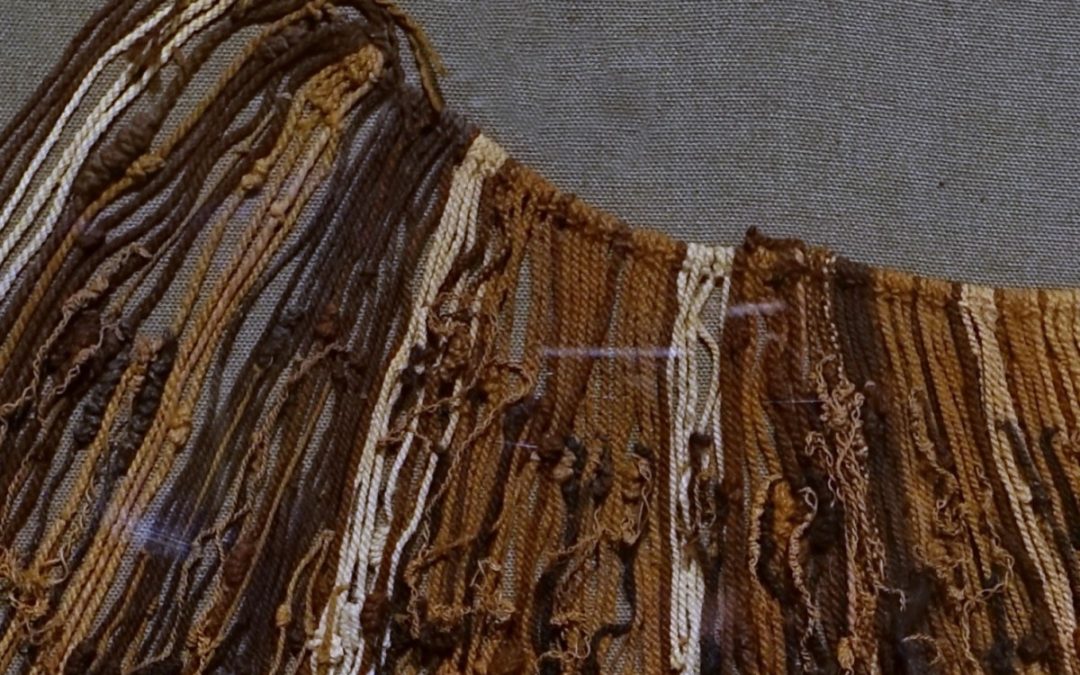
In 1533 Pizarro and his conquistadors at Cuzco precipitated the decline of the 300-year-old Inca empire in Peru. Fifty years later, the Spanish colonial administrators in Peru ordered the burning of all the Incan “khipu” knotted string records because they were “idolatrous objects.” Khipu were the Incas’ only form of writing. The smoke from the burning of their books gets in your eyes, forever and ever.
* * * * * *
Book review. Copyright © Richard Carl Subber 2023 All rights reserved.
Book review: The Sea Runners
…it informs, it does not soar…
by Ivan Doig
–
Writing Rainbows: Poems for Grown-Ups with 59 free verse and haiku poems,
and the rest of my poetry books are for sale on Amazon (paperback and Kindle)
and free in Kindle Unlimited, search Amazon for “Richard Carl Subber”
* * * * * *

by Richard Subber | Mar 5, 2023 | American history, Book reviews, Books, History
they weren’t heroic…
Book review:
Go Down Together:
The True, Untold Story of Bonnie and Clyde
by Jeff Guinn (b1951)
New York: Simon and Schuster, 2009
467 pages
Newspaper coverage in the early 1930s turned Bonnie Parker and Clyde Barrow into nationwide celebrities. Movies and books have perpetuated the carelessly positive news coverage, and the often fictional heroic antics of the crime duo.
The matter-of-fact treatment in Go Down Together makes the unvarnished reality more clear: Bonnie and Clyde were wacky, violent, and vicious criminals who killed 13 people and spent their 21-month crime spree on the run, mostly living “…the mundane, routine Barrow Gang misery of camping in cars and dining on cans of cold beans.”
They were killed in an ambush on May 23, 1934, in Louisiana. Several officers of the law fired about 160 bullets at them in less than 20 seconds—neither Bonnie nor Clyde fired a single shot.
Nothing about Bonnie and Clyde makes a pretty picture.
* * * * * *
Book review. Copyright © Richard Carl Subber 2023 All rights reserved.
–
As with another eye: Poems of exactitude with 55 free verse and haiku poems,
and the rest of my poetry books are for sale on Amazon (paperback and Kindle)
and free in Kindle Unlimited, search Amazon for “Richard Carl Subber”
* * * * * *
by Richard Subber | Feb 25, 2023 | American history, Book reviews, Books, History, World history
engrossing, but not Larson’s best…
Book review:
Dead Wake: The Last Crossing of the Lusitania
by Erik Larson (b1954)
Crown Publishers, New York, 2015
430 pages
I’m a fan of Erik Larson, starting with The Devil in the White City. Dead Wake offers a similar reading experience in Larson’s “no frippery” prose, and with a consistent tension that makes it a page turner.
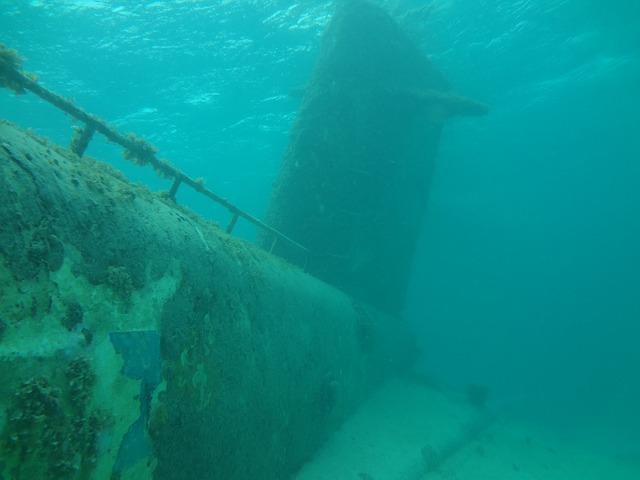
I confess that it’s hard to avoid the somewhat deadening spoiler in this story: from Page 1, we know how it’s going to end. Torpedoed by Germany’s U-20, the Lusitania went down in about 18 minutes. Larson’s approach is exclusively chronological; it’s not a bad thing, but I found myself almost thinking out loud—“let’s get on with it”—as I navigated through the certainly more than adequate number of anecdotal scenes involving the ill-fated passengers and their clothing/meals/flirtations/premonitions/self-assurances…
Full disclosure: to the end, I was rooting for passenger Theodate Pope to get some love in her life. On the other hand, I now know far more than I care to know about President Wilson’s mushy courting of Edith Galt (who became his second wife).
The thing is, Larson tells a great yarn here but he doesn’t invite the reader to grapple with it. It falls short of shattering, consequential drama. The sociable elements—the almost chatty context—of much of his tale seem to displace full engagement with the terror of the event, and the outcomes that it hastened.
Larson tries to invest this story with solemnity, respect, and understanding.
Dead Wake is a dutiful—indeed, engrossing—account, but it doesn’t quite rise to the occasion.
* * * * * *
Book review. Copyright © Richard Carl Subber 2023 All rights reserved.
Play review: A Doll’s House
Henrik Ibsen’s classic on abuse…
–
As with another eye: Poems of exactitude with 55 free verse and haiku poems,
and the rest of my poetry books are for sale on Amazon (paperback and Kindle)
and free in Kindle Unlimited, search Amazon for “Richard Carl Subber”
* * * * * *
by Richard Subber | Apr 22, 2022 | American history, Book reviews, Books, History, Human Nature
toil and trouble….and craziness
Book review:
The Witches: Salem, 1692
by Stacy Schiff (b1961)
Little, Brown and Company, New York, 2015
498 pages
It may be that Stacy Schiff has neglected to include some fact or sentiment about the Salem witch trials, but I can’t imagine what it might be. The Witches is an expansive compendium of the whos and whats and whys and wherefores of this compelling—yet essentially impenetrable—story about a community gone crazy.
Maybe you had to be there to understand it.
It’s too easy to suggest that the McCarthy Communism hunting in 1954 is a modern analogy, but it won’t work. The whole dreadful McCarthy thing was a political football, approaching a sideshow even though it attracted the nominal attention of the nation and destroyed many lives.
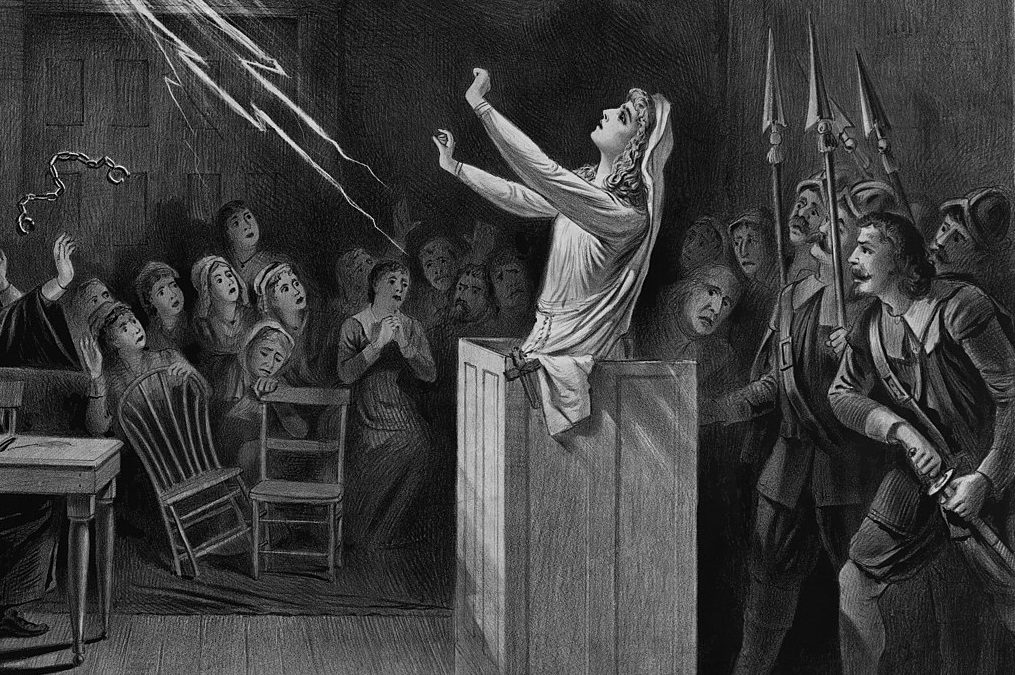
The Salem witch trials (and the witch hunting that went on in neighboring towns) consumed the waking hours of all the townsfolk, who were deeply convinced that witches exist and that they were in league with satanic forces.
For my taste, Schiff tells too much of the story. I would have been content with a less detailed account. There is repetition that is dispensable.
For my taste, she struck a good balance between telling the story as it happened, and inviting the reader to suspect that the teenage girls were fooling all along, and that too many accusers had a personal reason to “get” the accused, and that too many religious and civic leaders who struggled unsuccessfully with their religious faith and the opposing impulses of their arguably decent selves had quickly figured out that the witch craze was a very nasty game.
You don’t need to read the whole book to figure out that there was some very destructive bogus stuff going on in the Massachusetts Bay Colony in 1692.
You don’t need to read the whole book to be convinced that some folks aren’t continuously motivated by a decent streak of good will and a desire to support communal well-being.
* * * * * *
Book review. Copyright © Richard Carl Subber 2022 All rights reserved.
–
My first name was rain: A dreamery of poems with 52 free verse and haiku poems,
and the rest of my poetry books are for sale on Amazon (paperback and Kindle)
and free in Kindle Unlimited, search Amazon for “Richard Carl Subber”
* * * * * *
by Richard Subber | Jun 5, 2021 | American history, Book reviews, Books, History, Human Nature, Politics
…the Irish weren’t the only ones…
Book review:
How the Irish Became White
by Noel Ignatiev (1940-2019)
American author and historian
New York: Routledge, 1995
Ignatiev offers enough detail and context to satisfy historians of every stripe.
For the less ambitious reader, there may be a bit more than she cares to know in How the Irish Became White.
Of course, I certainly don’t presume to summarize the author’s careful exposition in 233 pages.
If you really want to know more about how non-black immigrants allowed and persuaded themselves to buy in to the systemic racism that flourished in America since the 17th century, dig in to How the Irish Became White.
One sure point is: don’t pick on the Irish exclusively. They certainly weren’t alone in their transgressions.
* * * * * *
Book review. Copyright © Richard Carl Subber 2021 All rights reserved.
–
Above all: Poems of dawn and more with 74 free verse poems,
and the rest of my poetry books are for sale on Amazon (paperback and Kindle)
and free in Kindle Unlimited, search Amazon for “Richard Carl Subber”
* * * * * *
