by Richard Subber | May 16, 2024 | American history, Book reviews, Books, History, Politics, Power and inequality
“credit” is P.C. for “lending money”
Book review:
American Bonds:
How Credit Markets Shaped a Nation
by Sarah L. Quinn
Princeton, NJ: Princeton University Press, 2019
288 pages
Quinn writes plain academic prose, and she has a lot to say.
“Credit” is a very polite way of saying “lending money,” which is a very polite way of describing what is elsewhere called “usury.”
It’s no surprise that lending money has been part of the social, economic, and political landscapes since money was invented, and certainly credit markets have always existed in America since colonial times.
American Bonds is a deeply engrossing text (it’s not a casual read) about how folks with money and businesses and the government have used credit availability for personal, corporate, and policy advantages. Credit has always been part of the American story.
You might try reading it a chapter at a time.
* * * * * *
Book review. Copyright © Richard Carl Subber 2024 All rights reserved.
Home Team: Poems About Baseball (book review)
Edwin Romond hits another homer…
My first name was rain: A dreamery of poems with 53 free verse and haiku poems,
and the rest of my poetry books are for sale on Amazon (paperback and Kindle)
and free in Kindle Unlimited, search Amazon for “Richard Carl Subber”
* * * * * *

by Richard Subber | Apr 14, 2024 | American history, Book reviews, Books, Democracy, History, Human Nature, Politics, Power and inequality
the American crisis…
Book review:
Twilight of the Elites: America After Meritocracy
by Christopher Hayes
New York: Crown Publishers, 2012
292 pages
Twilight of the Elites is a frightening assessment of our culture, our government—our civitas.
“We are in the midst of a broad and devastating crisis of authority” (p. 13). You bet we are—and Hayes was writing before Trump was even a speck in your eye.
Americans embrace the American Dream, the Horatio Alger thing, that is, meritocracy: the acceptance and endorsement of the goodness of the idea that we should help ourselves to prosper and be successful, and that those among us with the greatest talent and strength and ambition should enjoy greater prosperity and greater success. It is an article of faith among most Americans that the cream will rise to the top, and deservedly so. Honest hard work will and should be rewarded. One of Hayes’ definitions of a benign meritocracy is “the aristocracy of talent.”
An obvious characteristic of meritocracy, of course, is inequality. “It is precisely our collective embrace of inequality that has produced a cohort of socially distant, blinkered, and self-dealing elites. It is those same elites who have been responsible for the cascade of institutional failure that has produced the crisis of authority through which we are now living…the consistent theme that unites [these failures] is elite malfeasance and elite corruption” (pp. 22-23). This acceptance of the meritocracy mythology “allows everyone to imagine the possibility of deliverance [from unfavorable circumstances], to readily conjure the image of a lavish and wildly successful future” (p. 47).
Hayes points out, however, that “a deep recognition of the slow death of the meritocratic dream underlies the decline of trust in public institutions and the crisis of authority in which we are now mired. Since people cannot bring themselves to disbelieve in the central premise of the American dream, they focus their ire and skepticism instead on the broken institutions it has formed” (p. 63). There is ample attention to the dreadful failure of the media, among other institutions, to sustain our communal understanding and respect for facts and the truth.
A suggestion about one possible agent of positive change identifies a “radicalized upper middle class” that bridges the liberal-conservative division, and forces accountability on our institutions of government, justice, education and finance. Hayes imagines “a crisis…necessary upheaval and social transformation,” and acknowledges the obvious: those with power never want to give it up.
Twilight reminds us that the ultra-wealthy, ultra-powerful 1% will hang on to what they’ve got—and keep trying to get more—until their reality changes.
Hayes tells many truths about the devastation that wracks American culture and most Americans, because the myth of the American dream is enabling a tiny elite to amass wealth and power, and use both to corrupt our society.
Americans must accept the frightening hardships
of a sincere commitment to change things.
Let’s get started.
* * * * * *
Book review. Copyright © Richard Carl Subber 2024 All rights reserved.
Book review: Tales from Shakespeare
summaries by Charles and Mary Lamb…
Seeing far: Selected poems with 47 free verse and haiku poems,
and the rest of my poetry books are for sale on Amazon (paperback and Kindle)
and free in Kindle Unlimited, search Amazon for “Richard Carl Subber”
* * * * * *
by Richard Subber | Dec 24, 2023 | American history, Book reviews, Books, History
strange men are shooting…
Book review:
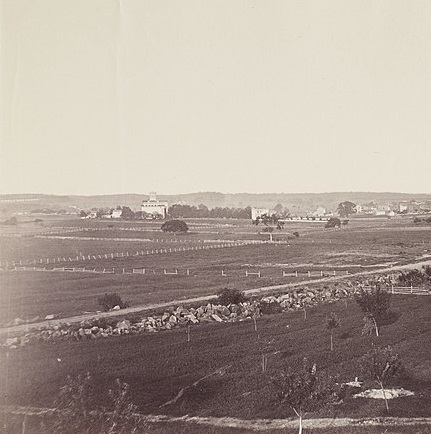
The Diary of a Lady of Gettysburg, Pennsylvania
From June 15 to July 15, 1863
by Pennsylvania Lady of Gettysburg
Ithaca, NY: The Cornell University Library Digital Collections, 2023
29 pages
There is not much fireworks in The Diary of a Lady of Gettysburg, Pennsylvania.
Rather, this largely muted account of a civilian lady in Gettysburg during the famous battle is a compelling tribute to the civilians and combatants who unhappily endured the terrible fighting and killing that could have effectively ended the American Civil War, but didn’t.
A devastating insight into the civilians’ prolonged stress and suffering is this: during most of the battle, they really didn’t know very much about what was going on. The civilians who stayed in the town (most of them) repeatedly hunkered down in their cellars and waited until the artillery bombardments ceased. The civilians repeatedly talked with both Union and Confederate soldiers who were in or moving through the town. The civilians, in the main, tried to care for the wounded men of both sides who happened to be nearby.
The battle of Gettysburg was terrifying for the civilian residents of the town, and, luckily for them, it didn’t last too long.
Try to imagine hiding in your house for four or five days, desperately wondering what’s going on, while strange men are walking and running through the streets, shooting at everything, and cannon balls are hitting buildings every so often.
* * * * * *
Book review. Copyright © Richard Carl Subber 2023 All rights reserved.
Book review: The Sea Runners
…it informs, but it does not soar…
by Ivan Doig
In other words: Poems for your eyes and ears with 64 free verse and haiku poems,
and the rest of my poetry books are for sale on Amazon (paperback and Kindle)
and free in Kindle Unlimited, search Amazon for “Richard Carl Subber”
* * * * * *
by Richard Subber | Oct 3, 2023 | American history, Book reviews, Books, History, World history
a nightmare in slow motion
Book review:
Goodbye, Darkness: A Memoir of the Pacific War
by William Manchester (1922-2004)
Boston: Little, Brown and Company, 1980
401 pages
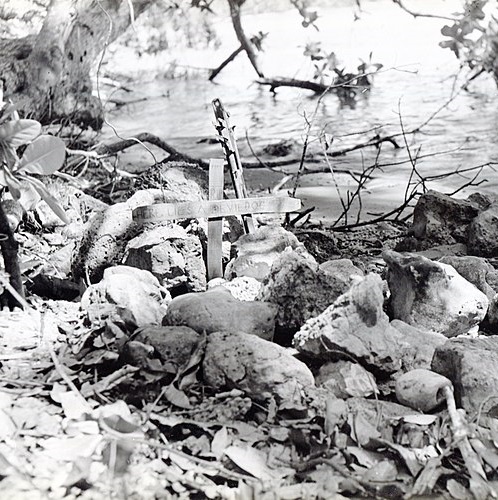
Manchester’s quietly passionate memories of being a young Marine fighting in the Pacific theater in World War II are terrible to behold.
In Goodbye, Darkness he tells all of his story: the good, the bad, and the really hard to read parts.
Reading Goodbye, Darkness means watching another man’s nightmare in slow motion.
* * * * * *
Book review. Copyright © Richard Carl Subber 2023 All rights reserved.
Book review: An Empire on the Edge
by Nick Bunker
Of course the British really wanted to win
the Revolutionary War,
but they had good reasons
for not trying too hard…
–
As with another eye: Poems of exactitude with 55 free verse and haiku poems,
and the rest of my poetry books are for sale on Amazon (paperback and Kindle)
and free in Kindle Unlimited, search Amazon for “Richard Carl Subber”
* * * * * *

by Richard Subber | Aug 24, 2023 | American history, Book reviews, Books, History, Human Nature
you can’t change your socks…
Book review:
With the Old Breed: At Peleliu and Okinawa
by Eugene B. Sledge (1923-2001)
New York: Oxford University Press, 1981
326 pages
Marine Cpl. Eugene B. Sledge (his Marine buddies called him “Sledgehammer”) knew there is no glory in combat. There is fear, comradeship, pain, duty, hunger, honesty, sadness, loyalty, and death.
With the Old Breed is a shockingly restrained and horribly candid account of Sledge’s experiences in the attacks on Peleliu and Okinawa by the 3rd Battalion, 5th Regiment, of the 1st Marine Division in the last year of World War II.
Read it, and you can mumble their prayers as you share the troubled joy of combat soldiers who survive the fighting in which their friends die.
* * * * * *
Book review. Copyright © Richard Carl Subber 2023 All rights reserved.
–
In other words: Poems for your eyes and ears with 64 free verse and haiku poems,
and the rest of my poetry books are for sale on Amazon (paperback and Kindle)
and free in Kindle Unlimited, search Amazon for “Richard Carl Subber”
* * * * * *
by Richard Subber | Aug 20, 2023 | American history, Book reviews, Books, History, Politics, Power and inequality
before there were “managers”…
Book review:
The Visible Hand:
The Managerial Revolution in American Business
by Alfred D. Chandler Jr. (1918-2007)
Cambridge, MA: The Belknap Press of Harvard University Press, 1977
608 pages
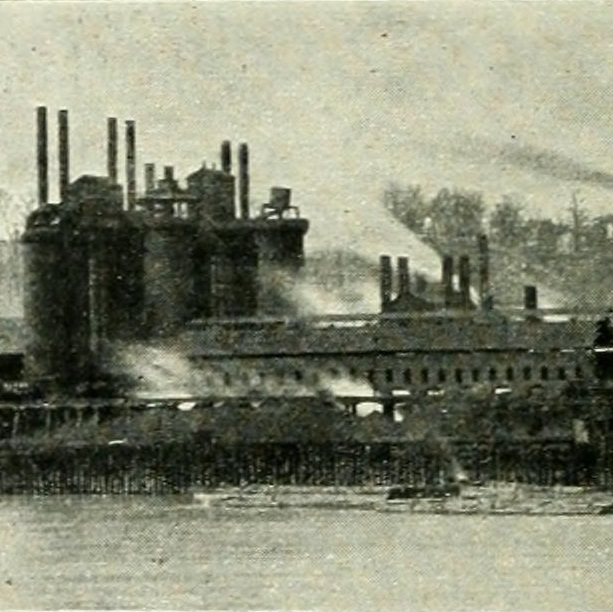
A densely researched and densely written history of the evolving American environment for various forms of capitalism and the appearance in the middle of the 19th century of “managers” who didn’t own the business or do the work.
You’ll learn some stuff about commercial, entrepreneurial, financial, and managerial capitalism.
This is an academic treatment of the good, the bad, and the ugly in the history of American corporate structure and performance. Chandler rarely refers to the political and moral aspects of the good works, the charlatanry, and the grossly criminal actions of the movers and shakers in the 19th century and early 20th century business world.
* * * * * *
Book review. Copyright © Richard Carl Subber 2023 All rights reserved.
Book review: Saint Joan
by George Bernard Shaw
–
In other words: Poems for your eyes and ears with 64 free verse and haiku poems,
and the rest of my poetry books are for sale on Amazon (paperback and Kindle)
and free in Kindle Unlimited, search Amazon for “Richard Carl Subber”
* * * * * *
