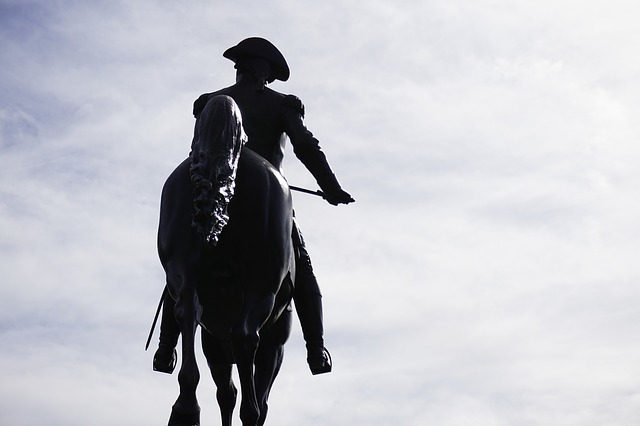
by Richard Subber | Sep 13, 2020 | American history, Book reviews, Books, History, Revolutionary War
Book review:
An Empire on the Edge:
How Britain Came to Fight America
by Nick Bunker
Here’s the short version of Nick Bunker’s thesis:
King George and his government
let the North American colonies slip from their grasp.
A newcomer to the history of the American Revolution might think that this book is a cockeyed way to learn about the “shot heard ‘round the world” and the consequences of the shooting at Lexington and Concord on April 19, 1775.
An informed student of the Revolutionary War probably will find much new material in Bunker’s relentlessly detailed An Empire on the Edge: How Britain Came to Fight America.
On our side of the pond, we don’t have much opportunity to consider the war or the revolution from the British point of view.
Bunker offers devastating detail about the ill-informed, patronizing, self-serving, doctrinaire, and sometimes feckless actions of Lord North and the British government in the years that led to the sanguinary clash of British regulars and American farmers-militiamen on the road from Concord, through Lexington, to Boston on “that famous day and year.”
An Empire on the Edge offers extensive documentation confirming that the British leaders were largely ignorant of the scope and depth of colonial antipathy toward the various punitive measures that Britain sought to impose in North America, as early as 1765 (the Stamp Act) and continuing to the final, ill-fated steps to chastise the city of Boston after the notorious Tea Party in late 1773.
Bunker describes the half-cocked military moves by Lord North and his ministers in the years leading up to the disastrous outing to Lexington-Concord. The king and his government were not prepared to wage war successfully in North America, partly because they waited too long to believe that the colonists actually would fight, and partly because they disdained the colonials’ fighting capacity, and partly because they put higher priority on their Caribbean sugar colonies, and partly because they were pre-occupied with the military threat posed by France and various European intrigues.
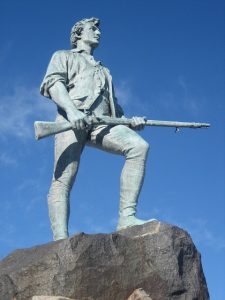 Bunker doesn’t speculate on a question that occurs to me: after that first shot was fired at Lexington, did the British really commit themselves to winning the war?
The king and his government made the commitment to fight. They did not, however, at any time before or during the war, commit all the king’s horses and all the king’s men to the military campaign to regain dominion in North America. As the fighting began, a British victory was not immediately feasible. Perhaps it did not become feasible.
Bunker’s analysis of the planning and wrangling in Lord North’s war room suggests that the British wanted to win, but never pushed the right strategic buttons to bring victory within their grasp.
Book review. Copyright © Richard Carl Subber 2016 All rights reserved.
———
Book review: An Empire Divided
King George and his ministers
wanted the Caribbean sugar islands
more than they wanted the 13 colonies…
by Andrew Jackson O’Shaughnessy
–
My first name was rain: A dreamery of poems with 52 free verse and haiku poems,
and the rest of my poetry books are for sale on Amazon (paperback and Kindle)
and free in Kindle Unlimited, search Amazon for “Richard Carl Subber”
by Richard Subber | Jun 29, 2020 | American history, History, Tidbits
“The Six Grandfathers”
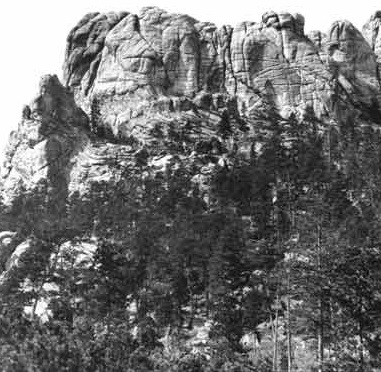
It’s generally believed that Mt. Rushmore was an unremarkable pile of rock before the famous sculptures of presidents were done.
Gutzon Borglum and his son, Lincoln Borglum, did the work starting in 1927, and it was completed in 1941. The Borglums and their crews blasted more than 400,000 tons of stone off the face of the mountain in the Black Hills in Keystone, SD.
Here’s the unfamiliar back story: It wasn’t always called Mt. Rushmore (The granite bluff was named after Charles Rushmore, a wealthy New York lawyer, in 1885).
The Lakota Sioux name for the mountain had been “The Six Grandfathers” (Tȟuŋkášila Šákpe).
It’s too bad the federal government didn’t authorize carving their likenesses into the face of the bluff.
N.B. The image is of Mt. Rushmore in 1905.
* * * * * *
Copyright © Richard Carl Subber 2020 All rights reserved.
Book review: The Snow Goose
…sensual drama, it’s eminently poetic…
by Paul Gallico
–
As with another eye: Poems of exactitude with 55 free verse and haiku poems,
and the rest of my poetry books are for sale on Amazon (paperback and Kindle)
and free in Kindle Unlimited, search Amazon for “Richard Carl Subber”
* * * * * *
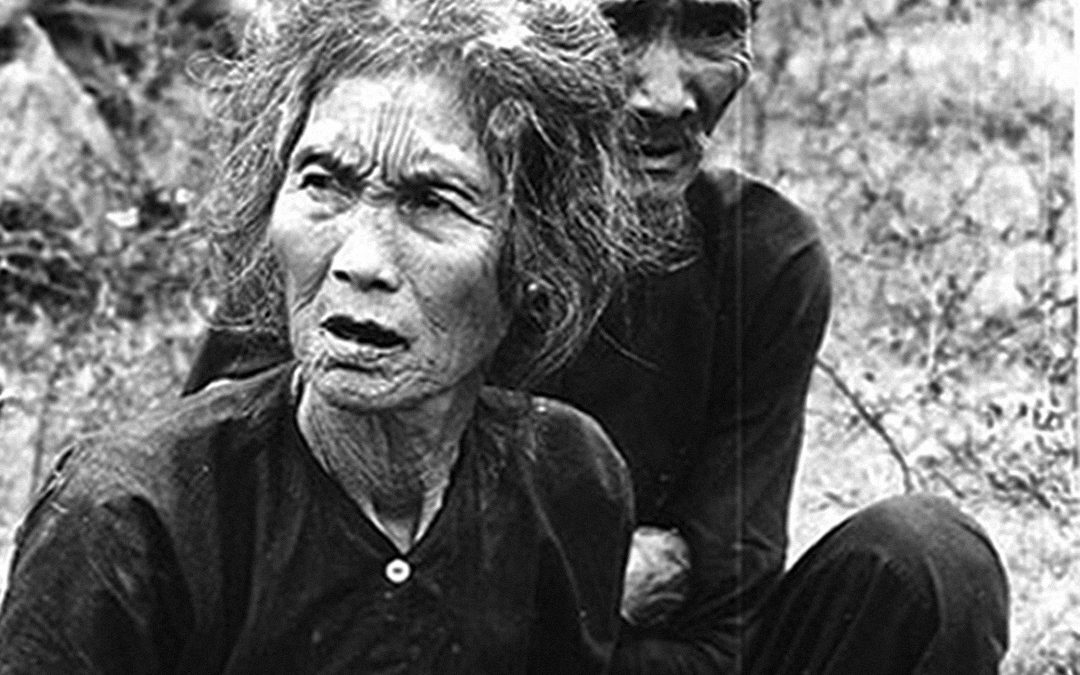
by Richard Subber | Jan 10, 2020 | American history, Book reviews, Books, History, World history
American leadership never was
what we thought it was…
Book review:
Fire in the Lake:
The Vietnamese and the Americans in Vietnam
by Frances FitzGerald (b1940), a Pulitzer Prize winner
Boston: An Atlantic Monthly Press Book, Little Brown and Company, 1972
491 pages
I don’t know how much of an audience there was for Fire in the Lake in 1972. I feel confident in guessing there wasn’t enough.
The American war in Vietnam was far from over in 1972 when FitzGerald wrote this densely researched journalistic review of U. S. policies and actions and ignorance in Southeast Asia. She makes it easier to understand why the American war effort was doomed from its earliest phase.
You should read Fire in the Lake to get the whole story–that is, the whole story as it was knowable in 1972. Be prepared to acknowledge that much of what you previously believed—and thought you knew—was wrong.
The American commitment to “containing Communism” was prominent, and tragically uninformed.
South Vietnam was the wrong place to try to “contain Communism,” no matter what that might mean.
There are more than 58,000 names on the walls of the Vietnam Veterans Memorial.
Some of them are the names of my friends.
* * * * * *
Book review. Copyright © Richard Carl Subber 2020 All rights reserved.
–
many waters: more poems with 53 free verse poems,
and the rest of my poetry books are for sale on Amazon (paperback and Kindle)
and free in Kindle Unlimited, search Amazon for “Richard Carl Subber”
* * * * * *
by Richard Subber | Jan 28, 2019 | American history, Book reviews, Books, History
“…conquerors who saw themselves
more as guardians…”
Book review:
The Comanche Empire
by Pekka Hämäläinen
New Haven: Yale University Press, 2008.
This book will change your mind about how the West was won.
Hint: The Comanches got there first.
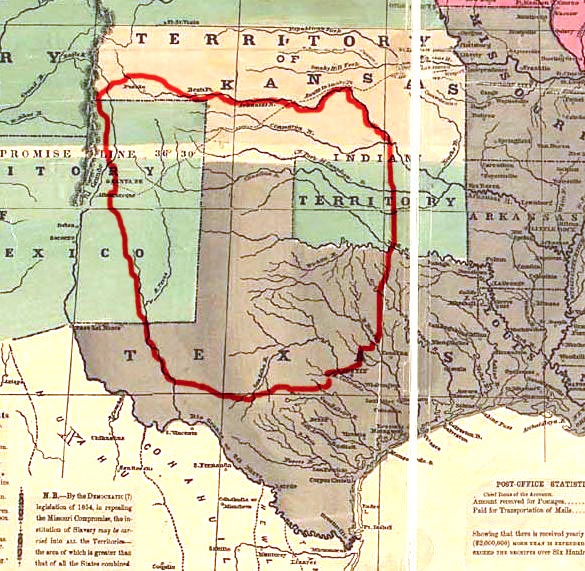
The Comanches arrived obscurely in the American Southwest in 1706. The Comanche Empire provocatively makes the case that the Comanches created an imposing Southwestern American empire that spanned 150 years. They blunted the 18th century colonial ambitions of the Spanish in Mexico and the French in Louisiana, and stalled the westward thrust of Americans and the U.S. government until the middle of the 19th century. A broad coalition of Comanche rancheria chiefs throughout the territory of Comancheria first dominated the Apaches, eventually turned against their Ute allies, and commercially or militarily subjugated numerous lesser tribes.
Comanches managed a succession of peace treaties and conflicts with the Spaniards and completely blocked their repeated efforts to extend colonial settlements northward from Mexico. The political, commercial and military supremacy of the Comanches was based principally on their success in adopting and adapting Spanish horses for efficient transportation, military power, and a thriving and lucrative trade in horses throughout the Southwest.
Hämäläinen‘s central argument invites—indeed it obviously provokes—a reasonable dispute about the credibility of his claim for a Comanche empire. Clearly, in classical political or geopolitical usage, the claim is untenable, at least in part; the Comanche empire had neither fixed borders, nor a single self-sustaining centralized supreme authority, nor a durable bureaucracy, nor a definitive political structure.
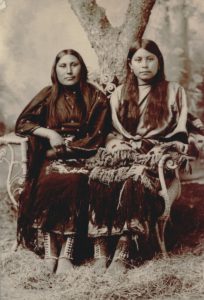 Nevertheless, the Comanches had a respected, recurring broadly representative council of chiefs that planned and organized extensive raids, trading and other commerce, and military operations. Their hunting, pasturing, and trading territories had indistinct geographic borders that were never surveyed or adjudicated; Comanches never sought to occupy and permanently control any specifically delineated territory. In The Comanche Empire, Hämäläinen says they were “conquerors who saw themselves more as guardians than governors of the land and its bounties.” Nonetheless, the geographical extent of the their domains was well known, respected and enforced by the Comanches.
Each Comanche rancheria had its own geographic territory, rigorous socio-military culture and hierarchical organization. The situational circumstances of Comanche military superiority, their control of trade and their ability through the decades to repeatedly impose and maintain obviously favorable terms in their treaty and trade agreements are undeniable evidence of the Comanches’ extended dominance of terrain, physical resources, culture and commerce, and, not least in importance, the Spanish and French colonial enterprises that sought to compete with them.
For decades the Comanches set the terms of their success; no competing power could defeat them, and no Indians or Europeans could evade the Comanches’ dominance in their domain.
It becomes obvious: the Comanches created a de facto empire.
Ultimately, they were marginalized by a combination of drought that constrained their bison hunting and weakened their pastoral horse culture, disruption of trade that limited their access to essential carbohydrate foodstuffs, epidemic disease that repeatedly thinned the Comanche populations, predatory bison hunting by the Americans in the early 1870s that wiped out the Indians’ essential food resource, and, finally, by the irresistible tide of U.S. government-sponsored westward migration that pushed American citizens into Comanche territory.
Too bad the Comanches left no accounts of their own. It would be fascinating to hear this story in their own words.
* * * * * *
Book review. Copyright © Richard Carl Subber 2019 All rights reserved.
many waters: more poems with 53 free verse poems,
and the rest of my poetry books are for sale on Amazon (paperback and Kindle)
and free in Kindle Unlimited, search Amazon for “Richard Carl Subber”
* * * * * *

by Richard Subber | Oct 13, 2018 | American history, History
America was already
an “old world”…
October 12, 2025, was the 533rd anniversary of the “discovery” of “the New World” by Christopher Columbus.
Columbus and his men made landfall in the Bahamas, possibly on what is now called San Salvador Island, on October 12, 1492. You may know the song: “the Nina, the Pinta, the Santa Maria, were sailing vessels three…”
Let’s cut to the chase: Columbus never “discovered” America. He never saw the North American continent, much less set foot on it. Columbus made four voyages across the Atlantic Ocean and did a lot of snooping around the Caribbean islands and the northern coast of South America.
An adventurer named Juan Ponce de León gets the teddy bear for being the first European to wade ashore on the coastline of what is now the continental United States. He explored the coast of a land mass that he named “Florida” more than 20 years after the first Columbus gig—on April 2, 1513, de León and his men landed (possibly at the place we now call St. Augustine) and claimed the territory for Spain.
Of course, the Europeans were late to the party.
At least millions of native Americans—probably tens of millions—had been living on the North American continent for thousands of years before the smelly, hairy white men from Europe barged in.
* * * * * *
Copyright © Richard Carl Subber 2018 All rights reserved.
Book review: American Colonies
you see, so many and so much
came before the Pilgrims
by Alan Taylor
click here
–
My first name was rain: A dreamery of poems with 52 free verse and haiku poems,
and the rest of my poetry books are for sale on Amazon (paperback and Kindle)
and free in Kindle Unlimited, search Amazon for “Richard Carl Subber”
* * * * * *
by Richard Subber | Jun 30, 2018 | American history, Book reviews, Books, History
…men who brought
their own shovels to work…
Book review:
Who Built America?
Working People
and the Nation’s Economy,
Politics, Culture, and Society,
Vol. 1 To 1877
by Christopher Clark and Nancy A. Hewitt
New York: Worth Publishers, 2000
721 pages, with a substantial Appendix and index
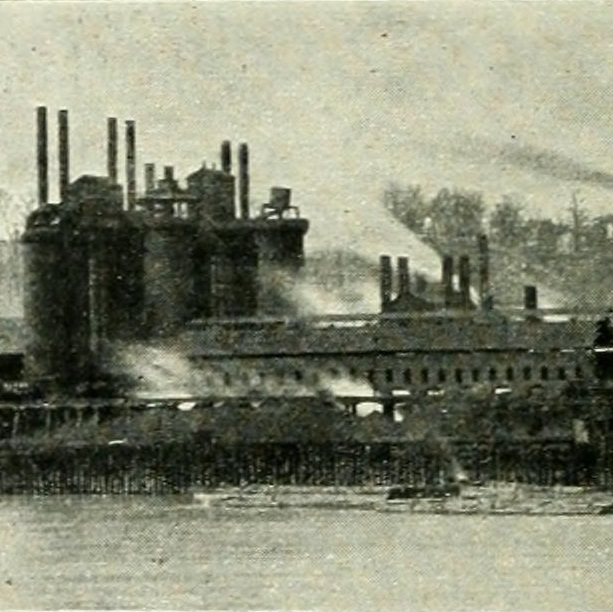
Who Built America? is a comprehensive, widely sourced reference work that tackles the story of the actual building of America and our cities, commerce/industries, and infrastructures.
Clark and Hewitt give full respect to the groups of people who labored to do so: native Americans, women and children, minorities, and immigrants are fully credited.
I think that a useful feature is the summary chronology and suggested complementary readings at the end of each chapter.
Who Built America? is a go-to reference for any serious student of American history.
Volume 2, covering the Reconstruction through the end of the 20th century, is an equally appealing component of this series published by the American Social History Project, City University of New York.
This 2000 edition of Who Built America? was written by Christopher Clark and Nancy A. Hewitt, based on the original edition written by Levine, Brier, Brundage, Countryman, Fennel, and Rediker.
* * * * * *
Book review. Copyright © Richard Carl Subber 2018 All rights reserved.
Book review: Forced Founders
by Woody Holton
The so-called “Founding Fathers”
weren’t the only ones
who helped to shape our independence…
–
As with another eye: Poems of exactitude with 55 free verse and haiku poems,
and the rest of my poetry books are for sale on Amazon (paperback and Kindle)
and free in Kindle Unlimited, search Amazon for “Richard Carl Subber”
* * * * * *
