by Richard Subber | Jan 29, 2026 | American history, Book reviews, Books, History, Reflections, World history
…the last battle never comes…
Book review:
We Were Soldiers Once…and Young
Lt. Gen. Harold G. Moore (ret.) and Joseph L. Galloway
New York: Random House, 1992
412 pages
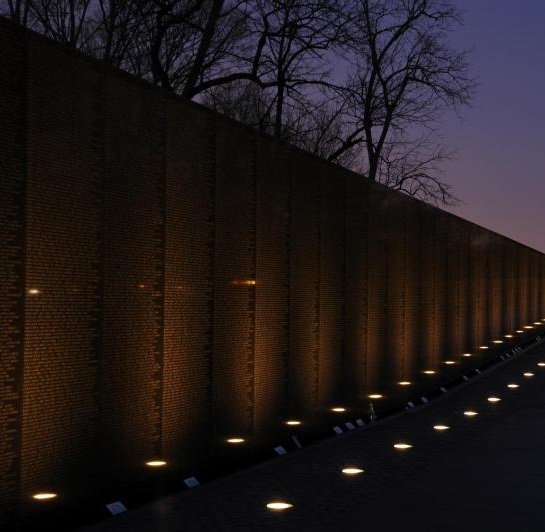
Like Moore and Galloway, I salute the brave American and North Vietnamese soldiers who fought and died in the Ia Drang Valley in November 1965 in the first major combat action of the War in Vietnam.
We Were Soldiers Once…and Young is a bloody testament to the grinding horror of war. It’s too much to read all at once. It has too much death.
A North Vietnamese commander who was on the ground in the valley recalled, many years after the war, that his guiding principle had been “win the first battle.”
He forgot to mention that no one knows how to win the last battle and end all of it.
* * * * * *
Book review. Copyright © Richard Carl Subber 2026 All rights reserved.
Movie review: A Doll’s House
Henrik Ibsen’s classic on abuse…
–
Seeing far: Selected poems with 47 free verse and haiku poems,
and the rest of my poetry books are for sale on Amazon (paperback and Kindle)
and free in Kindle Unlimited, search Amazon for “Richard Carl Subber”
* * * * * *
by Richard Subber | Dec 9, 2025 | American history, Book reviews, Books, History, Revolutionary War, World history
Did the British really try to win?
I have a lot to learn. With the humility of a student, I ask: how hard did the British try to win the American Revolutionary War?
It’s a research topic that intrigues me. I’m using the question to guide my reading. I’m careful to remind myself, often, that I don’t know the full answer. I think I know enough to believe that the bottom line is: the British wanted to win the war, but they never made the commitment required to do it.
I think I know enough to confirm the validity of the question. Britain had substantial economic engagement with the North American colonies in the latter part of the 18th century. The British West Indies—the Caribbean “sugar islands”—also were an important component of the British Atlantic colonial world. Britain had additional commitments in Florida, as well as military outposts, trading posts and other dependencies in Ireland, the Mediterranean, India, Africa, Central America, the Bahamas, the Bermudas, Nova Scotia, Quebec and Hudson’s Bay. Britain was intensely engaged in diplomacy and threatening entanglements with France, Spain and other European powers. Britain was an economic power, not a military titan.
King George and the British government did not have unlimited military resources. Army and naval forces were allocated to the rebellious American colonies, just as they were to the West Indies and other areas of vital interest. French and Spanish forces continually threatened the British Caribbean islands, an economic bastion of the British monarchy. There were not enough British ships and troops to establish compelling military superiority in every arena of British interest.
Ultimately, British admirals could not prevent a localized French naval superiority in the Chesapeake Bay that forced Cornwallis to surrender his under-sized army to Washington and Rochambeau at Yorktown in October, 1781. The war didn’t end then, but after Yorktown it became manifestly unwinnable for Britain.
Did the British government send enough troops and ships to North America to get the job done when the rebellion broke out? Was winning the war a pre-eminent priority for King George and his ministers? Doubtless the British wanted to win. How hard did they try? Initially they thought the rebellion would wither. Later, I think, they had more important fish to fry.
I’m not looking for a simple answer. I’m interested, first, in understanding the meaningful frames of reference for considering the question.
Sources:
Bowler, R. Arthur. Logistics and the Failure of the British Army in American, 1775-1783. Princeton, NJ: Princeton University Press, 1975.
Corwin, Edward S. French Policy and the American Alliance of 1778.1916. Reprint, Hamden, CT: Archon Books, 1962.
Duffy, Michael. Soldiers, Sugar and Seapower: The British Expeditions to the West Indies and the War Against Revolutionary France. Oxford: Clarendon Press, 1987.
Gipson, Lawrence Henry. The Triumphant Empire: The Empire Beyond the Storm, 1770-1776, vol. 13 of The British Empire Before The American Revolution. New York: Alfred A. Knopf, Inc., 1967.
O’Shaughnessy, Andrew Jackson. An Empire Divided: The American Revolution and the British Caribbean. Philadelphia: University of Pennsylvania Press, 2000.
Seton-Watson, Robert William. Britain In Europe: 1789-1914, A Survey of Foreign Policy. 1937. Reprint, Cambridge: The Cambridge University Press, 1955.
* * * * * *
Book review. Copyright © Richard Carl Subber 2025 All rights reserved.
Home Team: Poems About Baseball (book review)
Edwin Romond hits another homer…
–
many waters: more poems with 53 free verse poems,
and the rest of my poetry books are for sale on Amazon (paperback and Kindle)
and free in Kindle Unlimited, search Amazon for “Richard Carl Subber”
* * * * * *

by Richard Subber | Aug 19, 2025 | Book reviews, Books, History, Human Nature, World history
the not so “Dark Ages”
Book review:
The Bright Ages:
A New History of Medieval Europe
by Matthew Gabriele and David M. Perry
New York: HarperCollins, 2021
Gabriele and Perry offer quite a few things you never knew about the so-called “Dark Ages.”
The Bright Ages lays out an alternative view: life went on after the “sack” of Rome in 410 CE.
Various regional rulers and peoples continued to call themselves Romans for hundreds of years.
There was some beauty in the “Dark Ages.”
Human frailties were in full force before, during, and after the “Dark Ages.”
* * * * * *
Copyright © Richard Carl Subber 2025 All rights reserved.
Book review: The Financier
Theodore Dreiser’s villain…
–
In other words: Poems for your eyes and ears with 64 free verse and haiku poems,
and the rest of my poetry books are for sale on Amazon (paperback and Kindle)
and free in Kindle Unlimited, search Amazon for “Richard Carl Subber”
* * * * * *
by Richard Subber | Nov 12, 2024 | Book reviews, Books, History, Human Nature, World history
a corpse in the mirror
Book review:
Night
by Elie Wiesel (1928-2016)
Buchenwald survivor
Stella Rodway, trans.
New York: Bantam Books, 1958
109 pages
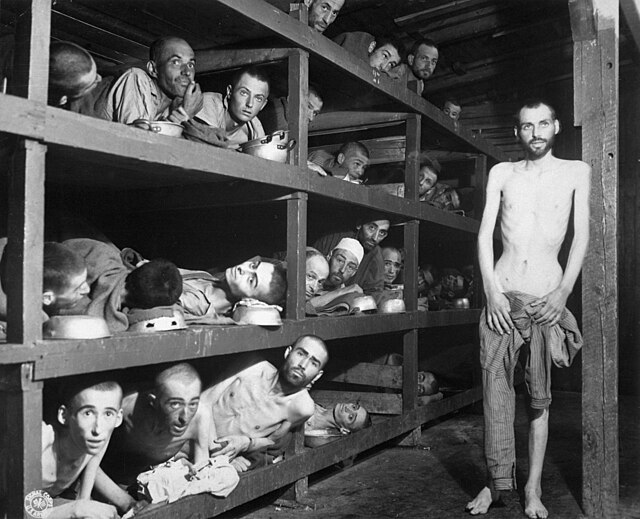
In Night, Elie Wiesel tells his story of being a teenage boy in the death camps of Nazi Germany during World War II.
He uses the necessary words, and he speaks from the depths of his being.
He lost his mother, his father, and his young sister in the camps.
He was liberated from Buchenwald by American soldiers on April 11, 1945.
Wiesel recalls that after he was freed, he saw his reflection in a mirror for the first time since he was transported:
“From the depths of the mirror, a corpse gazed back at me.”
* * * * * *
Book review. Copyright © Richard Carl Subber 2024 All rights reserved.
Home Team: Poems About Baseball (book review)
Edwin Romond hits another homer…
–
Writing Rainbows: Poems for Grown-Ups with 59 free verse and haiku poems,
and the rest of my poetry books are for sale on Amazon (paperback and Kindle)
and free in Kindle Unlimited, search Amazon for “Richard Carl Subber”
* * * * * *
by Richard Subber | Sep 22, 2024 | Book reviews, Books, History, Human Nature, Power and inequality, World history
not everything is vanity
Book review:
The Bombing of Auschwitz:
Should the Allies have Attempted It?
Michael J. Neufeld and Michael Berenbaum, eds.
New York: St. Martin’s Press, 2000
350 pages with extensive notes, bibliography, and index
The Bombing of Auschwitz: Should the Allies have Attempted It? is a retrospective, somewhat repetitive but broadly didactic selection of 15 arguments for and against the bombing of Auschwitz, with more than 40 primary source documents.
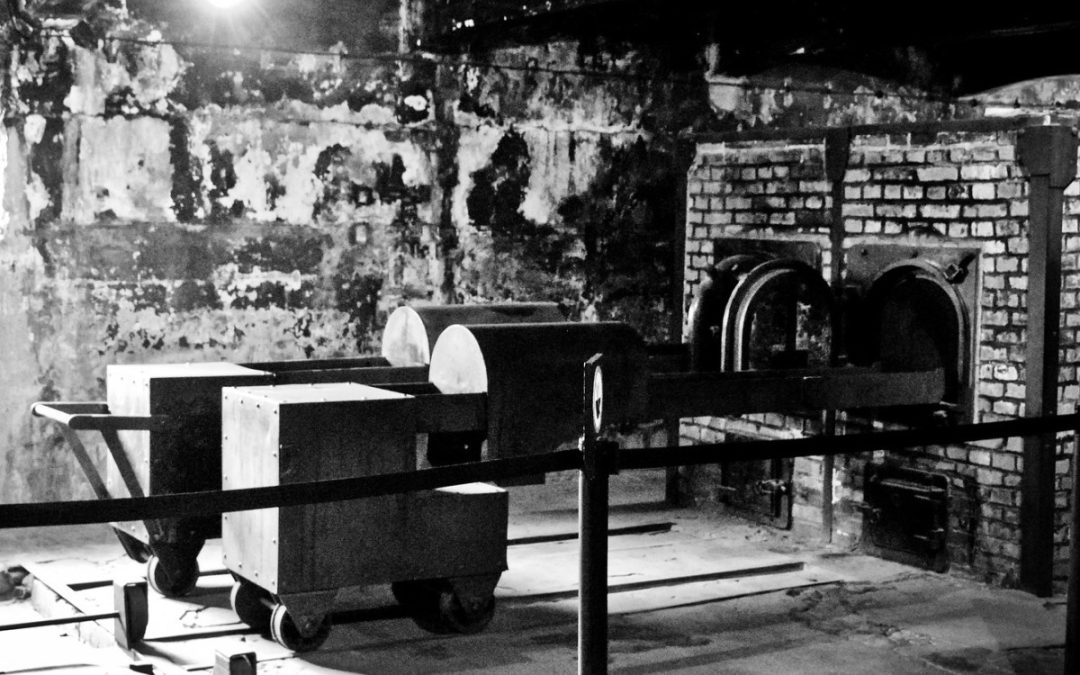
You’ll learn a lot about the terrible dilemma that the Allies faced—and some of them tried to ignore—during World War II. If the Allies had tried to bomb the crematoria, would Jewish lives have been saved? At what cost to the overall war effort?
Neufeld and Berenbaum offer 15 points of view, but, of course, the questions can’t be answered with full confidence.
Sadly, we can’t re-do the solitary track of history.
* * * * * *
Book review. Copyright © Richard Carl Subber 2024 All rights reserved.
Book review: Lord of the Flies
Never more relevant…
by William Golding
–
Seeing far: Selected poems with 47 free verse and haiku poems,
and the rest of my poetry books are for sale on Amazon (paperback and Kindle)
and free in Kindle Unlimited, search Amazon for “Richard Carl Subber”
* * * * * *
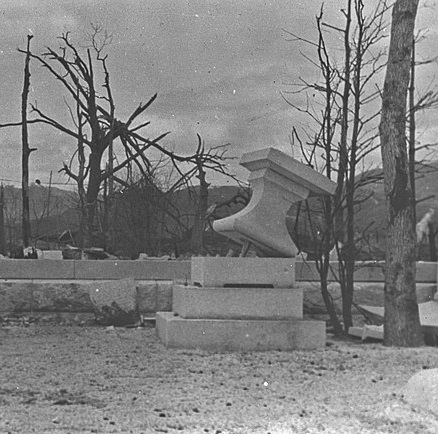
by Richard Subber | Jun 1, 2024 | American history, Book reviews, Books, History, World history
imagine that you had been there…
Book review:
Countdown 1945:
The Extraordinary Story of the Atomic Bomb
and the 116 Days That Changed the World
by Chris Wallace with Mitch Weiss
New York: Avid Reader Press, 2020
312 pages
There is quite tolerable intensity in Countdown 1945, in tandem with the horror of the use of the atomic bomb in Japan at the end of World War II.
There are gripping revelations from all of the principals involved in the development of the bomb and the decision to use it. There is dialogue more or less on every page. Countdown 1945 is not so much a book as it is the integration of tales told by the men and women who were there, doing it, and living through it.
This is one of the very few books I’ve read from cover to cover in the past several years.
It was a learning experience, and I was completely aware that I was vicariously sharing the terrible experiences of the folks who had anything to do with Little Boy and Fat Man.
* * * * * *
Book review. Copyright © Richard Carl Subber 2024 All rights reserved.
“The beginning is always today.”
(quote, Mary Shelley)
so get started…
My first name was rain: A dreamery of poems with 52 free verse and haiku poems,
and the rest of my poetry books are for sale on Amazon (paperback and Kindle)
and free in Kindle Unlimited, search Amazon for “Richard Carl Subber”
* * * * * *
