by Richard Subber | Sep 22, 2024 | Book reviews, Books, History, Human Nature, Power and inequality, World history
not everything is vanity
Book review:
The Bombing of Auschwitz:
Should the Allies have Attempted It?
Michael J. Neufeld and Michael Berenbaum, eds.
New York: St. Martin’s Press, 2000
350 pages with extensive notes, bibliography, and index
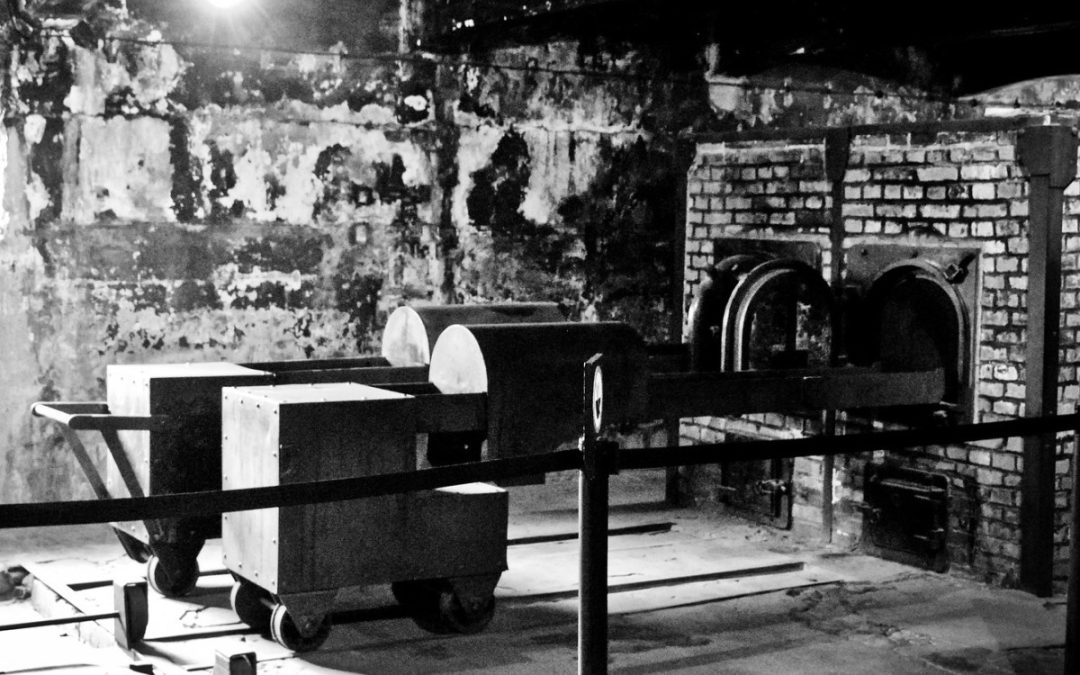
The Bombing of Auschwitz: Should the Allies have Attempted It? is a retrospective, somewhat repetitive but broadly didactic selection of 15 arguments for and against the bombing of Auschwitz, with more than 40 primary source documents.
You’ll learn a lot about the terrible dilemma that the Allies faced—and some of them tried to ignore—during World War II. If the Allies had tried to bomb the crematoria, would Jewish lives have been saved? At what cost to the overall war effort?
Neufeld and Berenbaum offer 15 points of view, but, of course, the questions can’t be answered with full confidence.
Sadly, we can’t re-do the solitary track of history.
* * * * * *
Book review. Copyright © Richard Carl Subber 2024 All rights reserved.
Book review: Lord of the Flies
Never more relevant…
by William Golding
–
Seeing far: Selected poems with 47 free verse and haiku poems,
and the rest of my poetry books are for sale on Amazon (paperback and Kindle)
and free in Kindle Unlimited, search Amazon for “Richard Carl Subber”
* * * * * *
by Richard Subber | Jul 27, 2024 | American history, Book reviews, Books, Democracy, History, Politics, Power and inequality, Reflections
think again about democracy
Book review:
Our Ancient Faith:
Lincoln, Democracy, and the American Experiment
Allen C. Guelzo
New York: Alfred A. Knopf, 2024
247 pages
Despite the title, Guelzo’s estimable book is not primarily or thematically about Abraham Lincoln. It is a densely researched and completely explained treatise on democracy, what it means, and what it might mean.
Our Ancient Faith opens new vistas of thought for me, and I’m thankful for my newly conceptual ideas about democracy, including the good, the bad, and the ugly. Make no mistake, democracy isn’t inherently our salvation. We’ve got a lot to do as we go down that path.
Granted, the reader will learn about Lincoln, although a good grounding in Lincoln’s life story and his times will serve the reader well.
I’m a bit leery of believing that I know for certain what a dead man was thinking when he said this and that. Guelzo perhaps reads too deeply into Lincoln’s recorded words. The book certainly is not hagiographic, and Lincoln certainly was a deep thinker, but I don’t want to forget that Lincoln was an ambitious man and a politician.
I’ll be inclined to read the book again for the expansive exposition of political thought.
The book, with extensive notes, is 247 pages, a very sensible length.
* * * * * *
Book review. Copyright © Richard Carl Subber 2024 All rights reserved.
Book review: The Snow Goose
…sensual drama, eminently poetic…
by Paul Gallico
As with another eye: Poems of exactitude with 55 free verse and haiku poems,
and the rest of my poetry books are for sale on Amazon (paperback and Kindle)
and free in Kindle Unlimited, search Amazon for “Richard Carl Subber”
* * * * * *
by Richard Subber | May 16, 2024 | American history, Book reviews, Books, History, Politics, Power and inequality
“credit” is P.C. for “lending money”
Book review:
American Bonds:
How Credit Markets Shaped a Nation
by Sarah L. Quinn
Princeton, NJ: Princeton University Press, 2019
288 pages
Quinn writes plain academic prose, and she has a lot to say.
“Credit” is a very polite way of saying “lending money,” which is a very polite way of describing what is elsewhere called “usury.”
It’s no surprise that lending money has been part of the social, economic, and political landscapes since money was invented, and certainly credit markets have always existed in America since colonial times.
American Bonds is a deeply engrossing text (it’s not a casual read) about how folks with money and businesses and the government have used credit availability for personal, corporate, and policy advantages. Credit has always been part of the American story.
You might try reading it a chapter at a time.
* * * * * *
Book review. Copyright © Richard Carl Subber 2024 All rights reserved.
Home Team: Poems About Baseball (book review)
Edwin Romond hits another homer…
My first name was rain: A dreamery of poems with 53 free verse and haiku poems,
and the rest of my poetry books are for sale on Amazon (paperback and Kindle)
and free in Kindle Unlimited, search Amazon for “Richard Carl Subber”
* * * * * *

by Richard Subber | May 12, 2024 | Book reviews, Books, History, Human Nature, Power and inequality, World history
energy is the bottom line…
Book review:
Foragers, Farmers, and Fossil Fuels:
How Human Values Evolve
by Ian Morris
Princeton, NJ: Princeton University Press, 2015
Contributors:
Richard Seaford
Jonathan D. Spence
Christine M. Korsgaard
Margaret Atwood
369 pages
Ian Morris says right up front that not everyone thinks he’s got it exactly right, but his story is an eye opener: how are human values and moral norms related to how human beings use energy?
Human beings need energy to survive, and obviously we need sources of energy.
The first human-like hunter-gatherers used energy that they could kill or pick up, and the first farmers planted their energy sources and domesticated a few animals, and now we depend (fatally?) on fossil fuel energy to live our lives.
Morris explains (attributes causes for) the different ways of “capturing” energy that are connected to how we feel about ourselves and how we deal with others.
If you think you’re satisfied with what you know about your code of values and the “do unto others…” stuff, then read Foragers, Farmers, and Fossil Fuels and learn some actual new stuff.
* * * * * *
Book review. Copyright © Richard Carl Subber 2024 All rights reserved.
Book review: The Map of Knowledge
it’s a slo-mo version of Fahrenheit 451
by Violet Moller
My first name was rain: A dreamery of poems with 52 free verse and haiku poems,
and the rest of my poetry books are for sale on Amazon (paperback and Kindle)
and free in Kindle Unlimited, search Amazon for “Richard Carl Subber”
* * * * * *

by Richard Subber | Apr 14, 2024 | American history, Book reviews, Books, Democracy, History, Human Nature, Politics, Power and inequality
the American crisis…
Book review:
Twilight of the Elites: America After Meritocracy
by Christopher Hayes
New York: Crown Publishers, 2012
292 pages
Twilight of the Elites is a frightening assessment of our culture, our government—our civitas.
“We are in the midst of a broad and devastating crisis of authority” (p. 13). You bet we are—and Hayes was writing before Trump was even a speck in your eye.
Americans embrace the American Dream, the Horatio Alger thing, that is, meritocracy: the acceptance and endorsement of the goodness of the idea that we should help ourselves to prosper and be successful, and that those among us with the greatest talent and strength and ambition should enjoy greater prosperity and greater success. It is an article of faith among most Americans that the cream will rise to the top, and deservedly so. Honest hard work will and should be rewarded. One of Hayes’ definitions of a benign meritocracy is “the aristocracy of talent.”
An obvious characteristic of meritocracy, of course, is inequality. “It is precisely our collective embrace of inequality that has produced a cohort of socially distant, blinkered, and self-dealing elites. It is those same elites who have been responsible for the cascade of institutional failure that has produced the crisis of authority through which we are now living…the consistent theme that unites [these failures] is elite malfeasance and elite corruption” (pp. 22-23). This acceptance of the meritocracy mythology “allows everyone to imagine the possibility of deliverance [from unfavorable circumstances], to readily conjure the image of a lavish and wildly successful future” (p. 47).
Hayes points out, however, that “a deep recognition of the slow death of the meritocratic dream underlies the decline of trust in public institutions and the crisis of authority in which we are now mired. Since people cannot bring themselves to disbelieve in the central premise of the American dream, they focus their ire and skepticism instead on the broken institutions it has formed” (p. 63). There is ample attention to the dreadful failure of the media, among other institutions, to sustain our communal understanding and respect for facts and the truth.
A suggestion about one possible agent of positive change identifies a “radicalized upper middle class” that bridges the liberal-conservative division, and forces accountability on our institutions of government, justice, education and finance. Hayes imagines “a crisis…necessary upheaval and social transformation,” and acknowledges the obvious: those with power never want to give it up.
Twilight reminds us that the ultra-wealthy, ultra-powerful 1% will hang on to what they’ve got—and keep trying to get more—until their reality changes.
Hayes tells many truths about the devastation that wracks American culture and most Americans, because the myth of the American dream is enabling a tiny elite to amass wealth and power, and use both to corrupt our society.
Americans must accept the frightening hardships
of a sincere commitment to change things.
Let’s get started.
* * * * * *
Book review. Copyright © Richard Carl Subber 2024 All rights reserved.
Book review: Tales from Shakespeare
summaries by Charles and Mary Lamb…
Seeing far: Selected poems with 47 free verse and haiku poems,
and the rest of my poetry books are for sale on Amazon (paperback and Kindle)
and free in Kindle Unlimited, search Amazon for “Richard Carl Subber”
* * * * * *
by Richard Subber | Aug 20, 2023 | American history, Book reviews, Books, History, Politics, Power and inequality
before there were “managers”…
Book review:
The Visible Hand:
The Managerial Revolution in American Business
by Alfred D. Chandler Jr. (1918-2007)
Cambridge, MA: The Belknap Press of Harvard University Press, 1977
608 pages
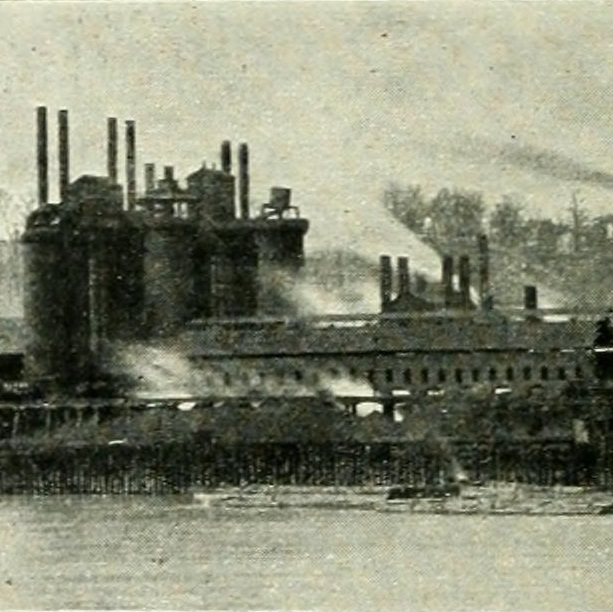
A densely researched and densely written history of the evolving American environment for various forms of capitalism and the appearance in the middle of the 19th century of “managers” who didn’t own the business or do the work.
You’ll learn some stuff about commercial, entrepreneurial, financial, and managerial capitalism.
This is an academic treatment of the good, the bad, and the ugly in the history of American corporate structure and performance. Chandler rarely refers to the political and moral aspects of the good works, the charlatanry, and the grossly criminal actions of the movers and shakers in the 19th century and early 20th century business world.
* * * * * *
Book review. Copyright © Richard Carl Subber 2023 All rights reserved.
Book review: Saint Joan
by George Bernard Shaw
–
In other words: Poems for your eyes and ears with 64 free verse and haiku poems,
and the rest of my poetry books are for sale on Amazon (paperback and Kindle)
and free in Kindle Unlimited, search Amazon for “Richard Carl Subber”
* * * * * *
