
by Richard Subber | May 27, 2025 | Book reviews, Books, Human Nature, Joys of reading, Language, Reflections
these characters are yearning, yearning…
Book review:
Victory
by Joseph Conrad (1857-1924)
New York: Doubleday, Doran & Company, Inc., 1928
412 pages
It may be that it is enough to say about Victory that it is lush prose that wraps around your mind and leaves you sated at the end of every chapter.
Conrad’s style, I dare to say, is not for every modern taste. It is dialogue-rich. The action is spare. For me, the essential appeal of Victory is the reflective context of the characters’ state of mind: their imaginations, their aspirations, their candid self-assessments.
In Victory, there is enough honesty, enough resignation, enough disappointment, enough yearning to make you feel like you want to claim that your life is good.
At least, good enough.
* * * * * *
Book review. Copyright © Richard Carl Subber 2025 All rights reserved.
–
Writing Rainbows: Poems for Grown-Ups with 59 free verse and haiku poems,
and the rest of my poetry books are for sale on Amazon (paperback and Kindle)
and free in Kindle Unlimited, search Amazon for “Richard Carl Subber”
* * * * * *

by Richard Subber | May 24, 2025 | My poetry, Poetry, Reflections
we can pass it forward…
in passing
Sometimes solitude
doesn’t embrace gratitude,
solitude has meaning and value,
but I am energized by “we,”
and I linger among the smiles
and do not hurry on
to the silence of myself…
…hear this, I trust my smile for others,
we can pass it forward
and never lose a mote of kindness,
we can meet the greetings
of the meek and the mighty,
and we can cast the seed
of the common good.
I think that I may think
on this again.
February 26, 2025
Inspired by “Gratitude” as valued by DeSales University, Center Valley, PA
* * * * * *
My poetry. Copyright © Richard Carl Subber 2025 All rights reserved.
–
Writing Rainbows: Poems for Grown-Ups with 59 free verse and haiku poems,
and the rest of my poetry books are for sale on Amazon (paperback and Kindle)
and free in Kindle Unlimited, search Amazon for “Richard Carl Subber”
Your comments are welcome—tell me what you’re thinking.
* * * * * *
by Richard Subber | May 22, 2025 | Book reviews, Books, Human Nature, Politics, Power and inequality
What if we run out of fish?
Book review:
The Sixth Extinction: An Unnatural History
by Elizabeth Kolbert
New York: Henry Holt and Company, 2014
319 pages
The unsurprising but unfamiliar takeaway from The Sixth Extinction: global climate change isn’t the only globally devastating problem that we have to deal with because it may make human beings extinct on our planet.
Mankind and womankind are changing the biosphere of Earth: animals, other living creatures, and plants are being extinguished at a devastating high rate, as a result of human agency. In the plainest terms: we need these animals, other living organisms, and plants in order to survive. There is no substitute for them.
We’re not just talking about a few snail darters in an environmentally endangered stream somewhere, and Kolbert isn’t doing sloganeering about “save the whales” or anything like that.
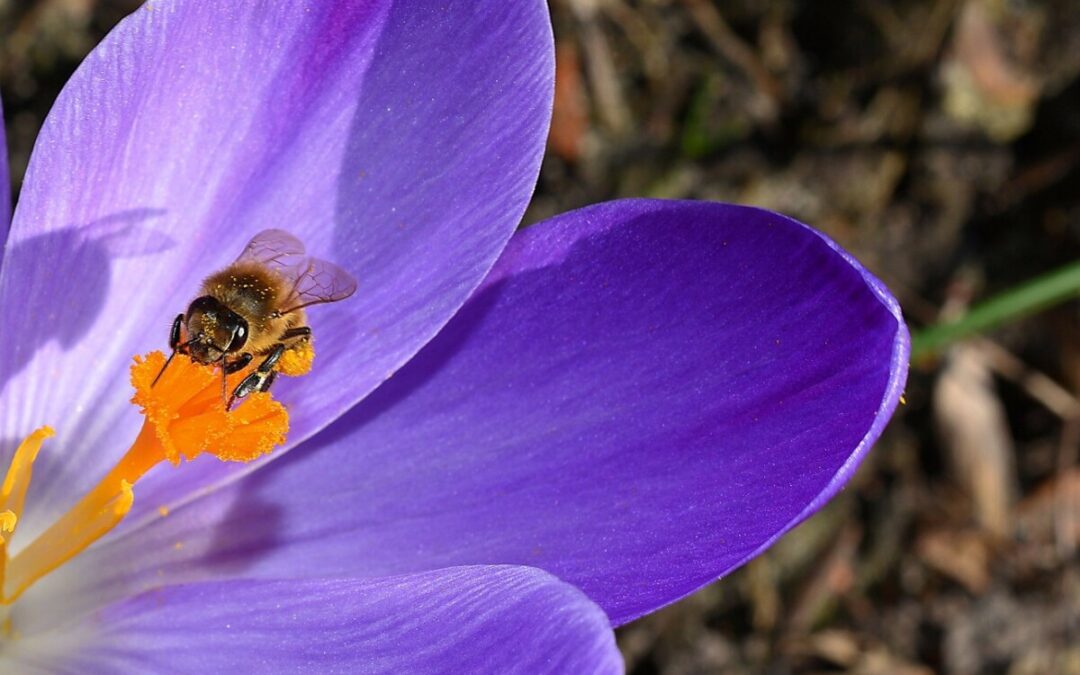
Extinctions of important elements in the natural food chain are continuing and accelerating, as a result of humans’ ability to interact with nature in both positive and negative ways on every land mass and body of water on the surface of the globe. Changes in the environment and changes in the food chain are happening too fast for many species to adapt and survive. What do we do if bees stop pollinating our fruit trees? What do we do if the oceans continue to become more acidic and won’t support the fish stocks we rely on for food?
The Sixth Extinction is a frightening read. It’s also a more difficult read than it needs to be: Kolbert’s prose is engaging and literate (this isn’t a beach book, no way), but it seems like she wrote two different books and then shuffled their pages together. Her devastating and irrefutable message is nearly obscured by her detailed treatment of example species like penguins, foraminifera, graptolites, corals, and little brown bats. Be prepared to skim.
* * * * * *
Book review. Copyright © Richard Carl Subber 2025 All rights reserved.
Book review:
American Scripture:
Making the Declaration of Independence
…basically, it’s trash talk to King George
by Pauline Maier
–
Seeing far: Selected poems with 47 free verse and haiku poems,
and the rest of my poetry books are for sale on Amazon (paperback and Kindle)
and free in Kindle Unlimited, search Amazon for “Richard Carl Subber”
* * * * * *
by Richard Subber | May 20, 2025 | Language, Poetry, Tidbits
all kinds of love…
“Perfect love has a breath of poetry…”
from Silas Marner
by “George Eliot” (Mary Ann Evans, 1819-1880)
Boston: Ginn and Company, 1898
p. 185
Indeed, it is an apple breath…
* * * * * *
Copyright © Richard Carl Subber 2025 All rights reserved.
A poem about the right thing
…and the lesser incarnation…
“Vanity”
–
Seeing far: Selected poems with 47 free verse and haiku poems,
and the rest of my poetry books are for sale on Amazon (paperback and Kindle)
and free in Kindle Unlimited, search Amazon for “Richard Carl Subber”
* * * * * *
by Richard Subber | May 18, 2025 | Human Nature, My poetry, Poetry, Reflections
sweet success
redux
It’s okay to do it again,
we finally start to learn
that “again” is a potent word,
an invitation, a command,
a goal, a triumph,
a reminder
that we don’t always get it right,
and the do-over
can be salvation
and sweet success
and atonement,
another chance to share a smile,
another round of thank-yous,
the best “I love you”
ever whispered.
March 1, 2025
* * * * * *
My poetry. Copyright © Richard Carl Subber 2025 All rights reserved.
Book review: An Empire on the Edge
by Nick Bunker
The British wanted to win
the Revolutionary War,
but they had good reasons
for not trying too hard…
–
My first name was rain: A dreamery of poems with 53 free verse and haiku poems,
and the rest of my poetry books are for sale on Amazon (paperback and Kindle)
and free in Kindle Unlimited, search Amazon for “Richard Carl Subber”
Your comments are welcome—tell me what you’re thinking.
* * * * * *
