Book review: Waterloo by Bernard Cornwell

Book review: Waterloo by Bernard Cornwell

Celebrity battle,

      butcher’s work

         on both sides…


Book review:

Waterloo


by Bernard Cornwell, New York: Penguin Books, c1987, 2001.

378 pages


This is my first read in Cornwell’s Richard Sharpe series. It’s both brilliant and deadening. Waterloo is a celebrity battle for most people, including me before I started Waterloo, and I guess most folks know little more than the outcome: Wellington and the Prussian commander, Blücher, put an end to Napoleon’s final fantastic comeback in Europe. The Little Corporal died six years later in exile.

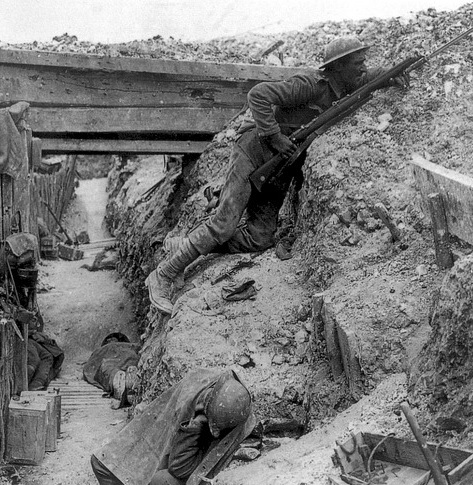
Cornwell is an appealing storyteller and his exacting descriptions of characters, places and the battlefield milieu are almost a reward in themselves. It’s really impossible to feel detached from what’s going on. Ay, there’s the rub. I felt distress and then full-blown horror as the fighting wound up and then wound down—nearly 50,000 men were killed or wounded in frantically compressed combat that ended on June 18, 1815, in a small valley in Braine-l’Alleud near the Belgian town of Waterloo, which gave the epic battle its name.

Even the slightly Hollywood bravery of Richard Sharpe doesn’t soften the impact of reading about the butcher’s work done on all sides in that violent meeting of men and ambitions. The somewhat formulaic treatment of the lives and loves of key characters is a slight distraction, but it really doesn’t hinder the accelerating martial excitement of Waterloo.

Cornwell is a compelling storyteller. I was greatly moved by Waterloo, but I can’t say I’m glad I read it.

As usual, I offer my kind of book summary here. This is not a standard history book. The characters and plot are all too familiar. I offer my reflections about the author’s style and about the terrible horror of the decisive battle near a little town in Belgium.

*   *   *   *   *   *

Book review. Copyright © Richard Carl Subber 2017 All rights reserved.

many waters: more poems with 53 free verse poems,
and the rest of my poetry books are for sale on Amazon (paperback and Kindle)
and free in Kindle Unlimited, search Amazon for “Richard Carl Subber”

*   *   *   *   *   *
Book review: The Proud Tower

Book review: The Proud Tower

…pay more attention

      to what people want…


Book review:

The Proud Tower


by Barbara Tuchman (1912-1989)

The Macmillan Co., New York, 1962


The Proud Tower is a typical Tuchman tour de force, beaucoup de détails quotidiens, and compelling context. It’s a lot more than a history book.

Tuchman offers her insights into the mindset of her characters: Americans, English, French, and other Europeans during the prelude to World War I—the so-called “Great War.”

They never saw it coming.

You don’t need a summary of the plot of The Proud Tower.

Tuchman confirms the obvious: nearly all prediction is not useful.

One lesson is to pay more attention to what people want, and pay less attention to what they’re doing at the moment.

*   *   *   *  *

Book review. Copyright © Richard Carl Subber 2017 All rights reserved.


Forget about Buffy the Vampire Slayer

Dracula is a scary book, really…

click here

Writing Rainbows: Poems for Grown-Ups with 59 free verse and haiku poems,
and the rest of my poetry books are for sale on Amazon (paperback and Kindle)
and free in Kindle Unlimited, search Amazon for “Richard Carl Subber”

*   *   *   *   *   *

 

Follow Rick on Facebook

Thoughtful book reviews by Rick Subber

Nothing Found

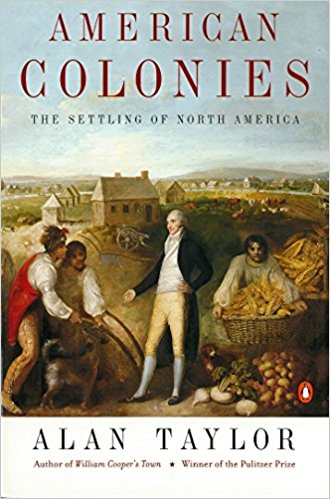
Book review: American Colonies

Book review: American Colonies

England was playing catch-up

with the Mayflower folks…


Book review:

American Colonies:

The Settling of North  America, Vol. 1


by Alan Taylor

New York: Penguin Books, 2002


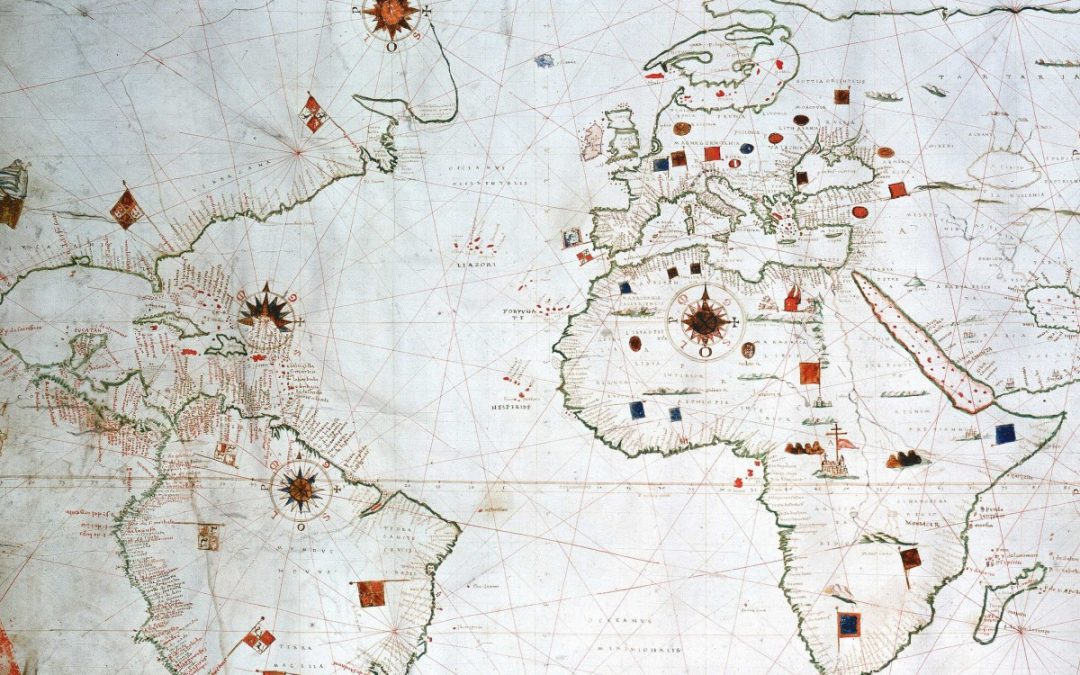
The Pilgrims and the founders of Plymouth Colony came late in the world-changing game of European invasion of the Americas.

The Portuguese, Spanish, and French preceded the English in exploring, settling, and exploiting North America, South America, and the Caribbean islands.

The plain fact is that English colonists were late arrivals because England had been preoccupied with European conflicts, and because England wasn’t sufficiently powerful to manage imperial strategies on both sides of the Atlantic before the 17th century brought new fears and new opportunities to the court of King James I.

This is a historian’s book.

I think American Colonies will not tempt a casual reader. It’s not so much that a reader needs detailed historical knowledge to enjoy and learn from American Colonies. Rather, a significant interest in the origins and context of colonial history in the Americas will allow a reader to broaden and deepen her knowledge and appreciation of the evolution of European intrusion on two continents that sustained tens of millions of indigenous inhabitants whose cultures were as ancient as those in Europe, and notably successful.

The brutal reality is that the invading Europeans killed most of the native peoples and displaced the survivors with despicable disdain and carelessly criminal violence.

Alan Taylor is a dispassionate, concise, notably well-informed historian who has organized this book to prepare the student of history for more study and more understanding of how we came to be the inheritors of the American experiences.

Taylor doesn’t waste any time with polemics against our predecessors who committed murders and did so many other evil things in establishing new settlements in the Americas. He doesn’t hide any of the horrors.

We have so much to learn about our past. This book importantly informs our quest.

*   *   *   *   *   *

Book review. Copyright © Richard Carl Subber 2017 All rights reserved.

many waters: more poems with 53 free verse poems,
and the rest of my poetry books are for sale on Amazon (paperback and Kindle)
and free in Kindle Unlimited, search Amazon for “Richard Carl Subber”

On this website you can read: my poetry in free verse and 5-7-5 haiku format—nature poems, love poems, poems about grandchildren, and a spectrum of other topics—written in a way that makes it possible for you to know, as precisely as possible, what’s going on in my mind and in my imagination; thoughtful book reviews that offer some exceptional critique of the book instead of a simple book summary; examinations of history that did and didn’t happen; examples of my love affair with words; reflections on the quotations, art, and wisdom of famous and not-so-famous people, and occasional comments on politics and human nature.

Your comments on my poems, book reviews and other posts are welcome.

Book review: Waterloo

The slightly Hollywood bravery

        of Richard Sharpe,

the butcher’s work done at the battle…

by Bernard Cornwell

click here

Follow Rick on Facebook

Thoughtful book reviews by Rick Subber

Nothing Found

Book review: An Empire Divided

Book review: An Empire Divided

it was all about the sugar islands…


Book review:

An Empire Divided:

The American Revolution

and the British Caribbean


by Andrew Jackson O’Shaughnessy

Philadelphia: University of Pennsylvania Press, 2000

O’Shaughnessy opens a new chapter in American history for me. One of his central themes is: why didn’t the British West Indies, the “sugar islands,” rebel at the same time as the North American mainland colonies that we know (incompletely) as the 13 original colonies? In fact, why didn’t the fabulously wealthy sugar islands rebel, period?

The West Indies—Barbados, Jamaica, and others in the British Caribbean—were part of the English colonial frontier throughout the period that we customarily regard as colonial American history, but we customarily ignore them. That’s a mistake. The West Indies were strongly integrated with the mainland colonies by trade, but politically they were a breed apart: much more strongly tied to the mother country through their protected status and monopoly exports of sugar products, and therefore much less inclined to rebel and throw away their continuing access to that richly rewarding connection. They needed the English navy to keep predatory French and Spanish forces at bay.

O’Shaughnessy’s prose is engaging, if a bit redundant here and there. He makes it plain that King George and his Privy Council and Parliament consistently dealt with the “big picture” of their Atlantic colonies, and he gives new context to the repeated punitive tax and other policies that helped to precipitate the Revolution.

An interesting revelation is that England never committed and never actually had enough military strength on our side of the pond to defeat Gen. Washington’s somewhat ragtag army.

Apparently the King and his ministers

wanted to hang on to the sugar islands

more urgently than they wanted

to keep the 13 colonies in the family.

Indeed, O’Shaughnessy takes pains to outline his argument that “the defense of the islands influenced British military strategy and contributed to the eventual British defeat at Yorktown,” sealing the victory of the rebellious mainland colonies in 1781 (p. xvi). The demands of West Indies plantation owners for protection, and the desire of the British government to secure the vast wealth of the sugar trade, caused naval and army forces to be allocated to the West Indies and thus drawn away from the Revolutionary War theater.

An Empire Divided was an insightful learning experience for me.

*   *   *   *   *   *

Book review. Copyright © Richard Carl Subber 2016 All rights reserved.

In other words: Poems for your eyes and ears with 64 free verse and haiku poems,
and the rest of my poetry books are for sale on Amazon (paperback and Kindle)
and free in Kindle Unlimited, search Amazon for “Richard Carl Subber”

*   *   *   *   *   *
Follow Rick on Facebook

Thoughtful book reviews by Rick Subber

Nothing Found

Pin It on Pinterest