by Richard Subber | Jan 7, 2025 | American history, Book reviews, Books, Democracy, History, Politics, Revolutionary War
…John Adams,
in the thick of it…
Book review:
John Adams
by David McCullough (1933-2022)
Simon & Schuster, New York, 2001
751 pages
Maybe you’re like me. Maybe you don’t think biography is the best way to do history. David McCullough’s Pulitzer Prize-winner is a reason to change your mind a bit.
John Adams, simply, is a really good book. McCullough helps you to warm up to this American icon and to his personal experience in leading the American Revolution and the first formative years of the American republic.
Adams, our first vice president and second president, was among the few who were in the thick of it from the beginning, and he never shrank from doing what he expansively viewed as his duty to his new country.
McCullough’s prose is a delightful experience for the serious historian and for the armchair dabbler who likes a good read. From cover to cover, John Adams is a lush, genuine presentation of a man, his loved ones, his career, his commitment to do good works and his never-flagging appreciation that the object of government should be to do the people’s business and make possible
* * * * * *
Book review. Copyright © Richard Carl Subber 2025 All rights reserved.
–
My first name was rain: A dreamery of poems with 53 free verse and haiku poems,
and the rest of my poetry books are for sale on Amazon (paperback and Kindle)
and free in Kindle Unlimited, search Amazon for “Richard Carl Subber”
* * * * * *
by Richard Subber | Dec 31, 2024 | American history, History, Human Nature, Theater and play reviews
to be or not to be…
Movie review:
Old Henry
The tension builds slowly in Old Henry (2021, not rated, 99 minutes) and you may be tempted to stop waiting to find out what it’s all about.
Truth is, it’s easy to stay with it.
There are no “stars” in Old Henry, and no Hollywood gush.
It’s a 1906 Oklahoma western that doesn’t need a soundtrack.
There is father-son conflict and bonding galore.
There is persistent necessity to consider the yin and yang of what’s right and what’s wrong and a lot of the in-betweens.
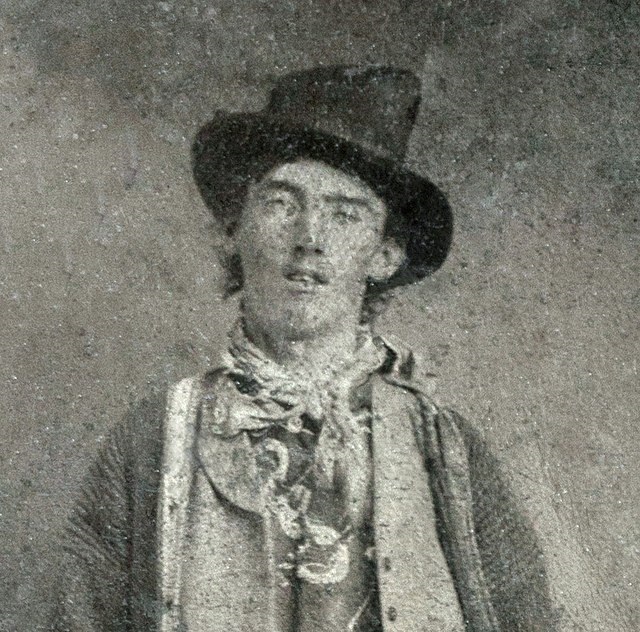
You’ll learn a few things you don’t already know about the real-life Henry McCarty who called himself William Bonney and is known to history as Billy the Kid.
You can take some time to think about this: are we who we were, or are we who we are, or can we be who we want to be, or should we be who our loved ones think we are…
Old Henry received the “Best Feature” award at the 2021 Almeria Western Film Festival.
* * * * * *
Movie review. Copyright © Richard Carl Subber 2024 All rights reserved.
“The beginning is always today.”
(quote, Mary Shelley)
so get started…
–
Writing Rainbows: Poems for Grown-Ups with 59 free verse and haiku poems,
and the rest of my poetry books are for sale on Amazon (paperback and Kindle)
and free in Kindle Unlimited, search Amazon for “Richard Carl Subber”
* * * * * *
by Richard Subber | Oct 26, 2024 | American history, Book reviews, Books, History, Power and inequality
…they readily went to war…
Book review:
Mayflower:
A Story of Courage, Community, and War
by Nathaniel Philbrick (b1956)
New York: Viking, The Penguin Group, 2006
461 pages
Philbrick offers his usual compelling narrative in Mayflower.
It becomes clear rather quickly that he’s not telling the elementary school version of the Pilgrims and Plymouth Rock and the “first Thanksgiving” that you may remember from your childhood.
The Pilgrims—the Separatists, as they named themselves—didn’t come to North America to establish religious freedom. They were escaping from limitations on their religious freedom that they had endured in England, and later, to some extent, in Holland. As the years went by in Plymouth and the Massachusetts Bay colony, they certainly did not extend any tolerance of religious freedom to those Europeans and Native Americans who held different religious beliefs.
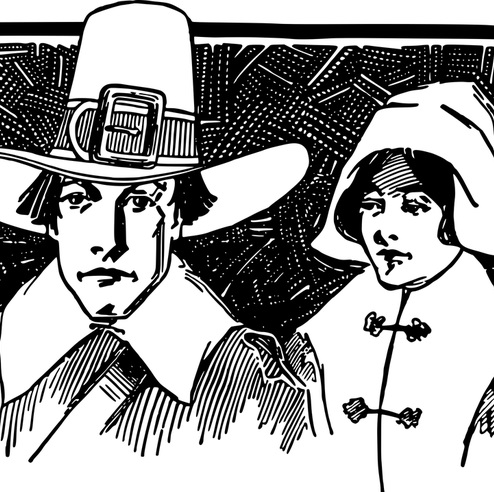
The Pilgrims were not simply a happy, peaceful people. They readily went to war with the Indians, in both defensive and offensive campaigns.
Many of the Pilgrims suffered gruesome physical privations and many of them died soon after arriving in what greedy European promoters liked to call The New World.
If you’re thinking how wonderful it would have been to be a Pilgrim in Plymouth in 1620, think again.
* * * * * *
Book review. Copyright © Richard Carl Subber 2024 All rights reserved.
–
Writing Rainbows: Poems for Grown-Ups with 59 free verse and haiku poems,
and the rest of my poetry books are for sale on Amazon (paperback and Kindle)
and free in Kindle Unlimited, search Amazon for “Richard Carl Subber”
* * * * * *
by Richard Subber | Sep 28, 2024 | American history, Books, History, Power and inequality
not what you learned in school…
Book review:
Facing East from Indian Country:
A Native History of Early America
Daniel K. Richter (b1954)
American historian, a Pulitzer Prize finalist
Cambridge, MA: Harvard University Press, 2001
You can count on Richter to provide a full course meal of insights and commentaries and knowledge about the original peoples of North America.
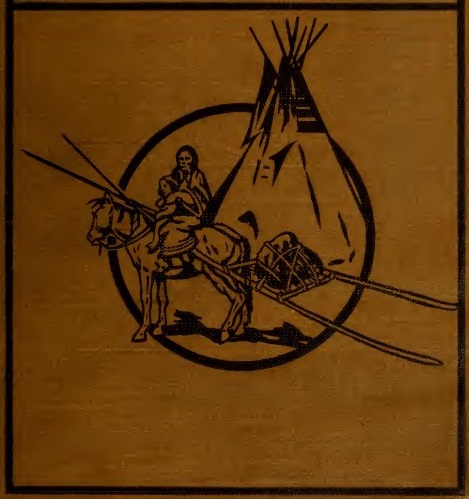
Dig in to Facing East from Indian Country to learn about how the Indians felt and what they understood about the Europeans who invaded their lands.
Nearly all of what we know about the Indians in pre-colonial and colonial times was written down by Europeans, but Richter is dedicated to discerning the Indians’ meaning, intent and recognition from the contexts and styles of those accounts.
You guessed it: it ain’t the American history you learned in school.
* * * * * *
Book review. Copyright © Richard Carl Subber 2024 All rights reserved.
Book review: Shawshank Redemption
This is a world I do not want to know…
by Stephen King
–
Seeing far: Selected poems with 47 free verse and haiku poems,
and the rest of my poetry books are for sale on Amazon (paperback and Kindle)
and free in Kindle Unlimited, search Amazon for “Richard Carl Subber”
* * * * * *
by Richard Subber | Jul 27, 2024 | American history, Book reviews, Books, Democracy, History, Politics, Power and inequality, Reflections
think again about democracy
Book review:
Our Ancient Faith:
Lincoln, Democracy, and the American Experiment
Allen C. Guelzo
New York: Alfred A. Knopf, 2024
247 pages
Despite the title, Guelzo’s estimable book is not primarily or thematically about Abraham Lincoln. It is a densely researched and completely explained treatise on democracy, what it means, and what it might mean.
Our Ancient Faith opens new vistas of thought for me, and I’m thankful for my newly conceptual ideas about democracy, including the good, the bad, and the ugly. Make no mistake, democracy isn’t inherently our salvation. We’ve got a lot to do as we go down that path.
Granted, the reader will learn about Lincoln, although a good grounding in Lincoln’s life story and his times will serve the reader well.
I’m a bit leery of believing that I know for certain what a dead man was thinking when he said this and that. Guelzo perhaps reads too deeply into Lincoln’s recorded words. The book certainly is not hagiographic, and Lincoln certainly was a deep thinker, but I don’t want to forget that Lincoln was an ambitious man and a politician.
I’ll be inclined to read the book again for the expansive exposition of political thought.
The book, with extensive notes, is 247 pages, a very sensible length.
* * * * * *
Book review. Copyright © Richard Carl Subber 2024 All rights reserved.
Book review: The Snow Goose
…sensual drama, eminently poetic…
by Paul Gallico
As with another eye: Poems of exactitude with 55 free verse and haiku poems,
and the rest of my poetry books are for sale on Amazon (paperback and Kindle)
and free in Kindle Unlimited, search Amazon for “Richard Carl Subber”
* * * * * *
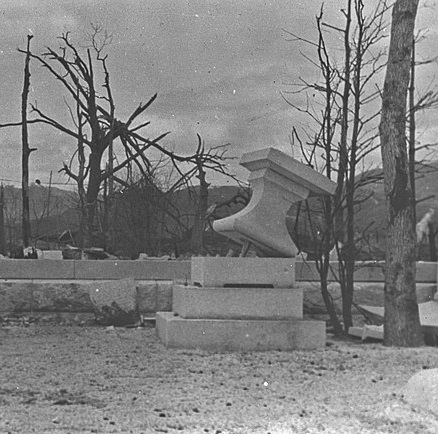
by Richard Subber | Jun 1, 2024 | American history, Book reviews, Books, History, World history
imagine that you had been there…
Book review:
Countdown 1945:
The Extraordinary Story of the Atomic Bomb
and the 116 Days That Changed the World
by Chris Wallace with Mitch Weiss
New York: Avid Reader Press, 2020
312 pages
There is quite tolerable intensity in Countdown 1945, in tandem with the horror of the use of the atomic bomb in Japan at the end of World War II.
There are gripping revelations from all of the principals involved in the development of the bomb and the decision to use it. There is dialogue more or less on every page. Countdown 1945 is not so much a book as it is the integration of tales told by the men and women who were there, doing it, and living through it.
This is one of the very few books I’ve read from cover to cover in the past several years.
It was a learning experience, and I was completely aware that I was vicariously sharing the terrible experiences of the folks who had anything to do with Little Boy and Fat Man.
* * * * * *
Book review. Copyright © Richard Carl Subber 2024 All rights reserved.
“The beginning is always today.”
(quote, Mary Shelley)
so get started…
My first name was rain: A dreamery of poems with 52 free verse and haiku poems,
and the rest of my poetry books are for sale on Amazon (paperback and Kindle)
and free in Kindle Unlimited, search Amazon for “Richard Carl Subber”
* * * * * *
