Book review: The Poems of Robert Frost

Book review: The Poems of Robert Frost

no need for a treasure map…


Book review:

The Poems of Robert Frost

With an Introductory Essay “The Constant Symbol”


by Robert Lee Frost (1874-1963)

New York: The Modern Library/Random House, Inc., 1946


In his opening essay, Frost says “…poetry…is metaphor, saying one thing and meaning another, saying one thing in terms of another, the pleasure of ulteriority. Poetry is simply made of metaphor.”

My copy of The Poems of Robert Frost is a treasure ship with two old stained green covers. I’ve been reading it for about 60 years. It’s a bit beat up, but when I open it, it shines.

I’m not reckless enough to name “my favorite” poem—I keep changing my mind as I read through them again. Frost is a teacher. He has found so many of the right words, and he has put so many of them in the right order.

I always enjoy “The Last Word of a Bluebird (as told to a child).” The Crow carries the little Bluebird’s final message to Lesley. In his low voice he brings word about the north wind and the impending winter cold that drives the Bluebird away. The compassionate bird urges Lesley to be good, and promises that “…perhaps in the spring/He would come back and sing.”

I’m waiting for the spring time, and I have a good book to help me pass the time.

*   *   *   *   *   *

Book review. Copyright © Richard Carl Subber 2019 All rights reserved.

As with another eye: Poems of exactitude with 55 free verse and haiku poems,
and the rest of my poetry books are for sale on Amazon (paperback and Kindle)
and free in Kindle Unlimited, search Amazon for “Richard Carl Subber”


*   *   *   *   *   *

Book review: The Cradle Place by Thomas Lux

Book review: The Cradle Place by Thomas Lux

clunky is the word…


Book review:

The Cradle Place


by Thomas Lux (1946-2017)

New York: Houghton Mifflin Company, 2004

61 pages


Some folks think Thomas Lux deserves to be a prize winner.

Not likely. He offers joyfully erratic, uncivil, and unimaginable poems.

Lux inclines to clunky excess in his descriptions. No spirits are born in The Cradle Place.

Although the jacket notes refer to “refreshing iconoclasms,” I couldn’t find any.

Mary Oliver doesn’t have to move over…

*   *   *   *   *   *

Book review. Copyright © Richard Carl Subber 2018 All rights reserved.


Thieves in the Night

A story of Israel…(book review)

by Arthur Koestler

click here

Seeing far: Selected poems with 47 free verse and haiku poems,
and the rest of my poetry books are for sale on Amazon (paperback and Kindle)
and free in Kindle Unlimited, search Amazon for “Richard Carl Subber”
*   *   *   *   *   *

Book review: Saint Joan

Book review: Saint Joan

Shaw’s calm dissection

      of the myths…


Book review:

Saint Joan


by George Bernard Shaw

Baltimore, MD: Penguin Books, 1964

159 pages, with extended Preface by Shaw and Epilogue


I read Saint Joan as a high school kid in 1964. I don’t remember much about that reading, except that I never forgot these words that Shaw wrote for his Joan: “I cannot bear to be hurt.”

It always seemed to me that Jehanne d’Arc (c1412-1431) could be the symbol of an innocent, profoundly driven young woman who was victimized by events that made a sweep in history, yet had only personal inspiration for her.

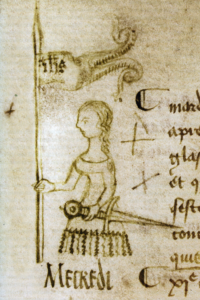
Joan of arc drawing wikimedia 1429 Contemporaine_afb_jeanne_d_arc

Sketch of Joan from life, 1429

In France, Joan is familiar as “the maid.” Did “la pucelle d’Orléans” (the maid of Orleans) really see and hear the Archangel Michael, St. Margaret, and St. Catherine? Who knows? Was Jehanne a religious nutcase who made confession every day and liked to play soldier? Who knows? Did she inspire great and not-so-great men to do mighty and courageous things in the service of their masters and for the glory of France? She did.


Shaw’s lengthy Preface to his play is a calm dissection of the myths and reality of this young woman, a noble and pitiable mover-and-shaker who led French armies to victory and who was burned at the stake for heresy and for cross-dressing. In Saint Joan, Shaw has few kind words for the men who resisted, accepted, honored, used, betrayed, burned, and finally beatified a peasant girl from Domrémy-la-Pucelle in northeastern France.

The folks in her home town finally named the village for her in 1578. You could say it was the least they could do while they were waiting for the Catholic church to make her a saint in 1920.


Shaw’s sympathetic treatment of The Maid inspired me to write this poem:


la pucelle


Joan, Joan, Joan…

O, you trusted your dream,

you thought it was enough to heed your voices,

you thought that God was on your side

and nothing else mattered,

you risked your beautiful soul

to save France,

and you didn’t understand

that too many of the men wanted

to win something else,

you went to the fire believing

in an eternity of goodness,

and you never knew

how little of your dream was left

for the people who loved you.


October 22, 2018

Inspired by George Bernard Shaw’s Saint Joan

My poem “la pucelle” was published in my fourth collection of 55 poems, As with another eye: Poems of exactitude. You can buy it on Amazon (paperback and Kindle), or get it free in Kindle Unlimited (search for “Richard Carl Subber”)

*   *   *   *   *   *

Book review. My poetry. Copyright © Richard Carl Subber 2018 All rights reserved.


As with another eye: Poems of exactitude with 55 free verse and haiku poems,
and the rest of my poetry books are for sale on Amazon (paperback and Kindle)
and free in Kindle Unlimited, search Amazon for “Richard Carl Subber”
*   *   *   *   *   *

Follow Rick on Facebook

Thoughtful book reviews by Rick Subber

Nothing Found

A tempest in a prison

A tempest in a prison

Alas, Atwood didn’t use

   Shakespeare’s pen


Book review:

Hag-Seed


by Margaret Atwood, New York: Hogarth Shakespeare, Crown Publishing Group, 2016


I’m not a fan of writers who write books that are imitations or re-interpretations of other writers’ work. Hag-Seed is a case in point. Let’s be fair. Shakespeare’s plays are complex assemblages of characters, speeches and plots. Atwood’s work, nominally based on The Tempest, has the same characteristics.

Her prose and dialogue are ordinary, for my taste. Her story is about as far as one can get from magical. Of course a reader can figure out which of her characters is aligned with Shakespeare’s Prospero and Caliban and Miranda and so on. Of course a reader can see a transparent image of Shakespeare’s plot.

For my taste, Hag-Seed is an awkward, deliberately mean, and desperately inelegant version of The Tempest.

Cut loose from the Shakespeare connection, Hag-Seed is low-grade storytelling. IMNSHO.

*   *   *   *   *   *

…and now for something completely different:


Hag-seed


Their hands are busy, rhythmic moves,

the three bend in to pace their work,

all hunched, with withered, trembling hands,

with eyes alert,

and silent lips that need not speak

the thoughts they share.


These crones engage each day to toil,

they do not keep a pot a-boil…

but a warming fire, as they need.

From different skeins

they draw their custom works in needled plait,

these hags intent on what’s in hand,

and hushed in awe of what’s at hand,

they huddle, each to each,

all cloaked in drab and drear,

their plainest miens

betray the luminous welling of their keenest joy,

and one of them, in blooming,

swells the hearts of all.


A spark of expectation lights and lightens

the artful labor of their crabbed fingers,

grasping small things of great portent—

a tiny cap, a shawl, a swaddling robe—

for the child to be born.


In waiting they are ladies

bound in common by certainty

and their exaltation

in believing that the babe will be a girl—

a budding rose without a thorn.


January 29, 2017

My poem “Hag-seed” was published January 23, 2018, in my second collection of 47 poems, Seeing far: Selected poems. You can buy it on Amazon (paperback and Kindle), or get it free in Kindle Unlimited, search for “Richard Carl Subber”

It’s easy to remember the sauce

(my nature poem)

“Debut”

click here


The Reader (Der Vorleser)

Not just a rehash of WWII…

by Bernhard Schlink

click here

I offer my kind of thoughtful book summary above. I write a serious review about almost every book I read. You can read other reviewers to get a detailed summary of what the book offers, and to learn specifics about the characters and plot. My reflective commentary is stimulated by the contents and the overall impact of the book, be it a love story or a history or a treatise or classic literature… Generally, I don’t have to post a spoiler alert. I’ll tell you about aspects of the book—the good, the bad, and the ugly—that make it exceptional. I’ll give you something to think about.

Your comments on my poems, book reviews and other posts are welcome.

Book review. My poetry. Copyright © Richard Carl Subber 2018 All rights reserved.

My first name was rain: A dreamery of poems with 52 free verse and haiku poems,
and the rest of my poetry books are for sale on Amazon (paperback and Kindle)
and free in Kindle Unlimited, search Amazon for “Richard Carl Subber”

Follow Rick on Facebook

Thoughtful book reviews by Rick Subber

Nothing Found

How does a poem end?

How does a poem end?

“…such words, the richest fare…”


Finis


To make a race, I mind the end

   and where to start the race, and when.

To craft a plan, the goal is key,

the outcome must be clear to see


To make a poem is not a race,

and not a plan, but what I face

   is how to start—not how to end—

      and what some musing may portend…


Some will say it’s hard to know

   just what comes first and what fills in,

and what sings out, and what can spin,

and what must stay, and what can go.


The ending, though, is something rare,

a mystery while scribbles dare

   to frame the poem, with rhyming, O!


…and then, such words, the richest fare,

in rampant form that lets me know

   the poem is done—the end, just so—

      the marvel: how my pen gets there.


July 2, 2018

This really is not a tutorial on writing poems.

It’s just a story about writing poems.

*   *   *   *   *   *

My poetry. Copyright © Richard Carl Subber 2018 All rights reserved.


My first name was rain: A dreamery of poems with 52 free verse and haiku poems,

and the rest of my poetry books are for sale on Amazon (paperback and Kindle)

and free in Kindle Unlimited, search Amazon for “Richard Carl Subber”

*   *   *   *   *   *

Follow Rick on Facebook

Thoughtful book reviews by Rick Subber

Nothing Found

Book review: Sketches by Boz

Book review: Sketches by Boz

The buzz about Boz!


Of course, they don’t write ‘em like this anymore.

Hooray for Charles Dickens (1812-1870). I’m talking about Sketches by Boz, his first book published in 1836.

I’m talking not only about the obvious point (Dickens has been dead these many years), but also about my understanding of the palpably inimitable Dickensian style.

Dickens does not fail to offer, time after time after time, character portraits that spring to life as you turn the pages—he sketches his characters with disinterested honesty, stout-hearted realism, generous indulgence, often a touch of whimsy…

 A case in point: “The Four Sisters,” who inhabit No. 25 Gordon Place in Sketches by Boz. In his brief (five pages) exposition of these cloistered ladies, Dickens ventures to create four personae that are not, will not, cannot be demeaned as a stereotype.

The Miss Willises—the master doesn’t trouble himself about not calling them the Misses Willis—are a scream, in a fastidiously literary kind of way.

Here’s a little taste:

“The house was the perfection of neatness—so were the four Miss Willises. Everything was formal, stiff, and cold—so were the four Miss Willises. Not a single chair of the whole set was ever seen out of its place—not a single Miss Willis of the whole four was ever seen out of hers. There they always sat, in the same places, doing precisely the same things at the same hour…They seemed to have no separate existence, but to have made up their minds just to winter through life together…The eldest Miss Willis grew bilious—the four Miss Willises grew bilious immediately. The eldest Miss Willis grew ill-tempered and religious—the four Miss Willises were ill-tempered and religious directly. Whatever the eldest did, the others did, and whatever anybody else did, they all disapproved of…”

I think this passage, like so many scenes in Dickens, is a singularity.

Re-reading Dickens is a singular treat for me.


You’re absolutely right, this is not quite a book review. I have a love affair with words, the carefully chosen words, words that express in exceptional ways the boundless variety of our thoughts, experiences, and emotions. I think a lot about life, the human condition, loving relationships with others, and the many levels of beauty, serenity, and delight in our natural environment. Reading the pithy words of real wordsmiths is always a learning opportunity.

*   *   *   *   *   *

Book review. Copyright © Richard Carl Subber 2018 All rights reserved.

Book review: The Blithedale Romance

by Nathaniel Hawthorne, it’s not his best…

click here

My first name was rain: A dreamery of poems with 52 free verse and haiku poems,
and the rest of my poetry books are for sale on Amazon (paperback and Kindle)
and free in Kindle Unlimited, search Amazon for “Richard Carl Subber”
*   *   *   *   *   *

Follow Rick on Facebook

Thoughtful book reviews by Rick Subber

Nothing Found

Pin It on Pinterest